
What is this project?
OpenStreetMap (OSM) is a powerful open-source resource, but it lacks detailed, photorealistic 3D cityscapes.
Students on the Qualcomm team will develop the world’s first open-source pipeline to generate photorealistic 3D street-level maps to support use in metaverse and digital twin applications.
What am I going to do?
MDP projects push you to integrate interdisciplinary engineering knowledge and develop strategic problem-solving skills.
On this project, students will develop an open-source pipeline to create photorealistic 3D street-level images to support use in the metaverse and digital twin applications.
- Build a functioning pipeline that:
- Extracts and pre-processes OSM data
- Converts 2D map data to basic 3D models
- Aligns and overlays real-world photos to enhance realism
- Demonstrate output with a working 3D model of multiple buildings
- Develop a robust method to capture 3D models with real-world images (manual and/or automated)
- Deliver a fully open-source, modular workflow that enables others to generate realistic 3D models using OpenStreetMap 3D data and manually captured photos
- Tech Stack: Blender, Open3D, OpenCV, Python
Stretch goal opportunities
- Enhance pipeline to support photos taken from varying angles and resolutions
- Extend support to models generated from photos captured by drones, smartphones, or IoT devices
Why does it matter?
Qualcomm has been a leader in wireless innovation and low-power high-performance computing for nearly four decades. As metaverse platforms and digital twins become more widespread, there’s a growing demand for detailed, photorealistic 3D models of real-world cities.
While OpenStreetMap (OSM) provides a strong open foundation, its models are functional – not realistic. This project will result in the world’s first open-source pipelines for generating photorealistic 3D street-level maps. It will support next-generation applications in augmented reality, autonomous navigation, and urban digital twins—paving the way for a more immersive and connected future.
Below are the skills needed for this project. Students with the following relevant skills and interests, regardless of major, are encouraged to apply! This is a team-based multidisciplinary project. Students on the team are not expected to have experience in all areas, but should be willing to learn and will be asked to perform a breadth of tasks throughout the two-semester project.
3D Mapping & Image Processing (4-5 students)
Specific Skills: Computer vision and deep learning
EECS 281 (or equivalent) is required, and Python experience is required
Likely Majors: CS, CSE, CE, EE, ECE, DATA, ROB
Urban Modeling & Data Context (1-2 Students)
Specific Skills: Urban planning background and architectural visualization
Must have beginner programming competency and Python experience
Likely Majors: URP, ARCH
Additional Desired Skills/Knowledge/Experience
Strong candidates will have familiarity or experience with some of the following items, and a positive attitude to learn what is necessary, as the project gets underway.
- Python, Blender, Open3D, OpenCV, PyTorch
- Supervised and self-guided learning
- 2D/3D object detection and segmentation
- Practical experience with photography or image processing
- Prior experience on student engineering teams
- Team leadership roles in any context
Recommended Coursework
List any relevant completed courses in your personal statement, including term, course number, and grade. Especially relevant:
- EECS 442: Computer Vision
- EECS 449: Conversational AI
- EECS 453: Machine Learning
- EECS 467: Autonomous Robotics
- EECS 504: Foundations of Computer Vision
- EECS 542: Advanced Topics in Computer Vision
Sponsor Mentor
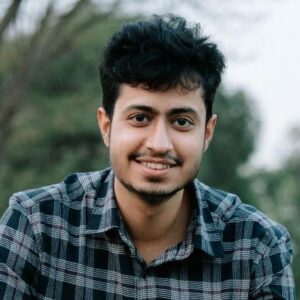
Satyam Gaba
Satyam is a Senior Machine Learning Engineer at Qualcomm R&D, with four years of experience advancing wireless communication technologies. His research focuses on applying computer vision and AI techniques to enhance 5G and 6G performance. He holds a Master’s in Computer Science from UC San Diego, and a Bachelor’s from BITS Pilani. Satyam has authored numerous papers presented at international conferences and journals, and holds 9 pending and 8 provisional U.S. patents.
Executive Mentor

Vijay Shirsathe
Vijay Shirsathe has had a distinguished career in engineering, particularly in the wireless technology sector. As the Vice President of Engineering at Qualcomm Inc., he is based in San Diego, California. His role involves overseeing critical engineering initiatives, and contributing to the development of next-generation wireless technologies.
Vijay has been instrumental in several innovative projects at Qualcomm. One notable project involves video-based channel state information (VCSI), which uses machine learning to enhance wireless communication by capturing and analyzing video data to improve channel state information. This project highlights Qualcomm’s commitment to advancing wireless technology and improving connectivity.
Faculty Mentor
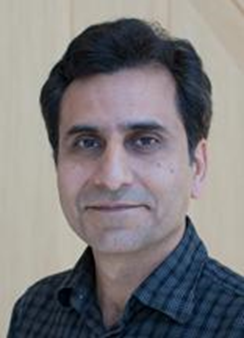
Kavyan Najarian
Professor of Computational Medicine and Bioinformatics
Professor of Emergency Medicine
Professor of Electrical Engineering and Computer Science
The focus of Dr. Najarian’s research is on the design of signal/image processing and machine learning methods to create computer-assisted clinical decision support systems that improve patient care and reduce the costs of healthcare. Dr. Najarian’s lab also designs sensors to collect and analyze physiological signals and images, focusing on creating decision support systems to manage traumatic brain injuries, traumatic pelvic/abdominal injuries, and hypovolemia. He serves as the Editor-in-Chief of Biomedical Engineering and Computational Biology and the Associate Editor of two other journals in the field of biomedical informatics.
Project Meetings
During the winter 2026 semester, the students and faculty mentor of the Qualcomm team will meet on North Campus on TBD day and time. The sponsor mentor will participate via video conference.
Work Location
Most of the work will take place on campus in Ann Arbor.
Course Substitutions: CE MDE, ChE Elective, CS Capstone/MDE, DATA Capstone, DATA Graduate Capstone, EE MDE, CoE Honors, ROB Flex Tech , ROB 590
Citizenship Requirements:
- Open to all students
- International students on F-1 visas must declare part-time CPT for both Winter 2026 and Fall 2026 terms
IP/NDA: This project will be open source, and all students must sign an open-source agreement.
Summer Project Activities: No summer activity will take place on the project.
Learn more about the expectations for this type of MDP project