
What is this project?
Electric fleet management is evolving, but today’s routing decisions still depend on static rules and human judgment—limiting efficiency, and increasing operational risk. Students on this team will design and implement an AI-powered fleet optimization agent that integrates real-time vehicle telemetry and external data to extend battery life, reduce delivery delays, and enable next-generation electric logistics for Isuzu’s autonomous battery electric vehicle (BEV) fleet.
What am I going to do?
MDP projects push you to integrate interdisciplinary engineering knowledge and develop strategic problem-solving skills. On this project, students will develop a prototype AI agent for BEV route planning and adaptation.
- Synthesize and clean real-world vehicle and environmental data provided by Isuzu
- Develop and validate at least one energy prediction model based on speed profiles, elevation gain, load, and weather
- Build a testbed for simulating real-world routing scenarios based on energy predictions and operational constraints, such as delivery windows, charging logistics, and vehicle capabilities
- Demonstrate improved delivery efficiency over baseline heuristic methods in simulation
- Model a centralized fleet planner that will coordinate with vehicle executions as intelligent agents, each with route goals, constraints, and performance history
- Complete technical documentation, and make design recommendations for future production integration
- Tech Stack: Python, PyTorch
Stretch Goal Opportunities Include:
- Implement real-time re-routing with updated inputs mid-route
- Coordinate multiple agents for route deconfliction or load balancing
- Incorporate fast-charging station optimization with queuing and wait-time forecasts
- Integrate human-in-the-loop override and explainability features
Why does it matter?
Smart electrification, vehicle autonomy, and connected vehicle platforms are evolving, but today’s routing operations are heavily relying on static rules, fragmented data, and separate functionalities, lacking a holistic view and usage of logistic information. ISUZU is pushing the boundaries, and envisioning next generation commercial mobility solutions. This project invites students to join us and develop an agentic AI based optimization that integrates vehicle telemetry data and external data (e.g. traffic, weather, delivery constraints) to autonomously inform, unify, and improve fleet decision making, aiming to reduce delivery delays, extend BEVs battery life, and enable next-generation logistics planning.
Battery electric vehicle (BEV) fleets face unique logistical challenges: range limitations, charging infrastructure variability, terrain-dependent energy consumption, and delivery time constraints. Human fleet managers cannot manually optimize routes fast enough, or accurately enough, when these conditions are constantly changing.
This project will deliver an AI agent that:
- Ingests and fuses real-time data sources—including vehicle state of charge, cargo load, weather, traffic, and road grade
- Predicts energy usage per route using machine learning models
- Recommends or adapts delivery routes in real time, using AI planning and optimization algorithms
Students will build a modular system combining vehicle telemetry, external data APIs, and advanced AI methods to generate dynamic, energy-aware routing plans.
Electric delivery fleets are the future of sustainable logistics—but range anxiety, inefficiencies, and delays can hinder adoption. A successful routing agent will:
- Improve battery range and reduce energy waste
- Automatically respond to unpredictable conditions (e.g., traffic or weather changes)
- Lower operational costs and increase on-time deliveries
- Position Isuzu’s fleet platform as a leader in intelligent EV logistics
Below are the skills needed for this project. Students with the following relevant skills and interests, regardless of major, are encouraged to apply! This is a team-based multidisciplinary project. Students on the team are not expected to have experience in all areas, but should be willing to learn and will be asked to perform a breadth of tasks throughout the two-semester project.
Machine Learning & Prediction (2-3 students)
Specific Skills: Supervised learning, time series models
Likely Majors: CS, CSE, DATA
Optimization & Route Planning (2-3 Students)
Specific Skills: Pathfinding, constraint programming, reinforcement learning/machine learning integration
Likely Majors: IOE, CS, CSE, ROB, DATA
Systems Integration & Simulation (1-2 Student)
Specific Skills: API design, data pipelines, agent-based simulation
EECS 281 or equivalent is required
Likely Majors: CS, CSE
Additional Desired Skills/Knowledge/Experience
Strong candidates will have familiarity or experience with some of the following items, and a positive attitude to learn what is necessary, as the project gets underway.
- Machine learning
- Reinforcement learning
- Interest/knowledge in automotive sector and/or BEVs
- Energy modelling
- Experience with Python and PyTorch
Recommended Coursework
Include completed relevant courses (term, institution, course number/title, and grade). Especially relevant:
- EECS 442: Computer Vision
- EECS 449: Conversational AI
- EECS 453: Machine Learning
- EECS 467: Autonomous Robotics
- EECS 567: Reinforcement Learning Theory
- IOE 310: Introduction to Optimization Methods
- ROB 330: Localization, Mapping, and Navigation
- ROB 520: Motion Planning
Sponsor Mentor
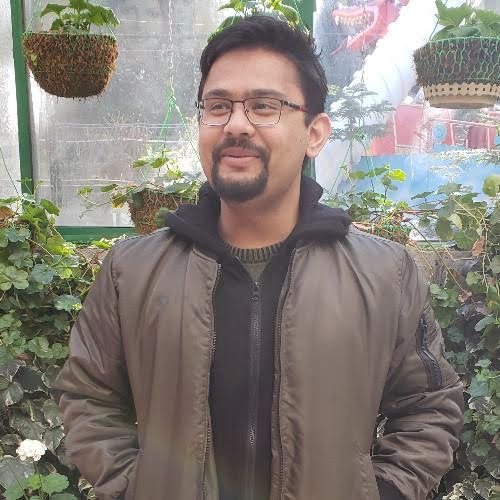
Saurabh Sharma
Saurabh Sharma is a supervisor of connected, autonomous, shared, and electric vehicles (CASE) technology and business strategy development at Isuzu North America. He has expertise in modelling full vehicle analysis, including engine cooling jacket flow and CHT, climate control systems (HVAC), under-hood flow and combustion system (gasoline, diesel, CNG and hydrogen), external aerodynamics and exhaust systems. Saurabh has an MS in Mechanical Engineering from the University of Illinois Chicago.
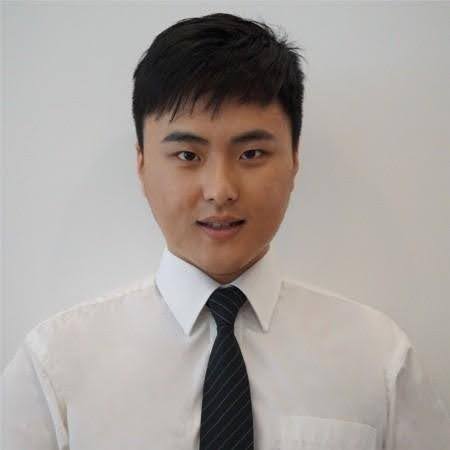
Yifan Wei
Yifan is a supervisor of model-based development at Isuzu Technical Center of America. His experience includes simulation, continuous integration and delivery, powertrain and vehicle model development, hardware in the loop simulation. Yifan has a master’s degree in mechanical engineering from the University of Michigan and was a member of the 2017 Isuzu MDP team!
Faculty Mentors
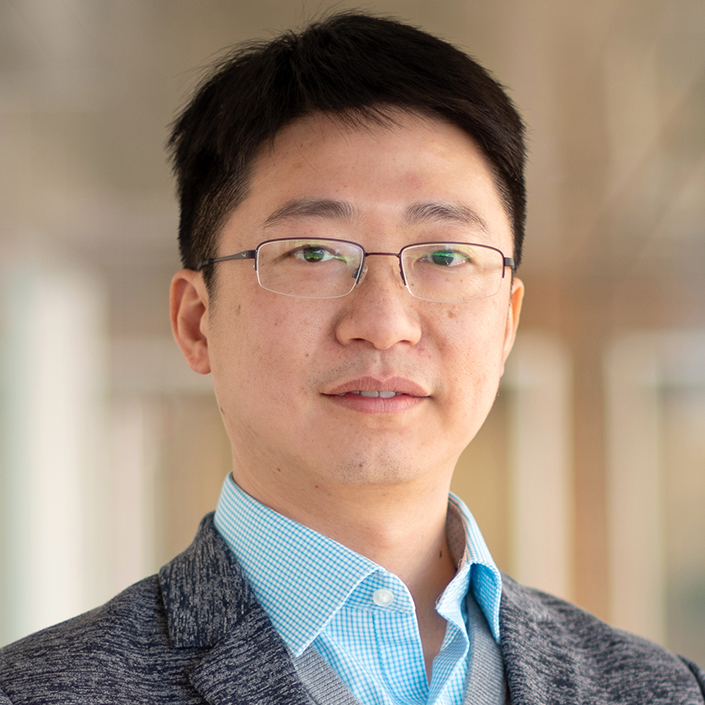
Lei Ying
Lei Ying received his B.E. degree from Tsinghua University, Beijing, China, and his M.S. and Ph.D. in Electrical and Computer Engineering from the University of Illinois at Urbana-Champaign. He currently is a Professor at the Electrical Engineering and Computer Science Department of the University of Michigan, Ann Arbor, an IEEE Fellow and an Editor-at-Large for the IEEE/ACM Transactions on Networking.
Project Meetings
During the winter 2026 semester, the Isuzu team will meet on North Campus on TBD.
Work Location
Most of the work will take place on campus in Ann Arbor, with visits to Isuzu’s corporate office in Plymouth, MI as needed to meet stakeholders and present data. MDP will provide transportation.
Course Substitutions: AUTO 503, CE MDE, ChE Elective, CS Capstone/MDE, DATA Capstone, DATA Graduate Capstone, GAME 503, CoE Honors, IOE Senior Design, MECHENG 590, ROB Flex Tech, ROB 590
Citizenship Requirements: This project is open to all students. Note: International students on an F-1 visa will be required to declare part time CPT during Winter 2026 and Fall 2026 terms.
IP/NDA: Students will sign IP/NDA documents that are unique to Isuzu.
Summer Project Activities:
Students will be guaranteed an interview for a 2026 internship. The interviews will take place before the end of February 2026.