
What is this project?
Ann Arbor is planning for 1,800 new housing units per year, with a projected 79% population increase by 2050. To support sustainable growth, this project will begin building a system-level Digital Twin of the city’s natural and constructed stormwater systems. Students will use real-world data to simulate how future development could impact watersheds, roads, and underground infrastructure.
What am I going to do?
MDP projects push you to integrate interdisciplinary engineering knowledge and develop strategic problem-solving skills. In this project, students will develop a functional simulation tool that integrates real-world data to model at least two aspects of urban development impacts, as a stepping stone towards building a system-level Digital Twin of the City of Ann Arbor.
- Gather and pre-process data from city records, geographic information systems (GIS), and public resources to understand historical impacts of development on chosen systems and identify main influencing factors
- Create algorithms to simulate development impacts on environmental systems for surface water management
- Design and verify a user-friendly interface to allow stakeholders to input different development scenarios, and view potential outcomes
- Validate the simulation accuracy with historical data or available real time data, to ensure its predictive capabilities are accurate
- Deliver a modular platform so urban planners and other stakeholders can independently use and expand the tool
- Run scenarios based on climate change and land use for forecasting 50 year land development planning
- Provide lessons learned to make recommendations for where and how to collect data to develop a full-scale Digital Twin
- Tech Stack: Python, ArcGIS, JavaScript, D3.js, NumPy, SciPy, R, SWMM, GitHub, PowerBI, Lumon or Twin Motion
Stretch Goal Opportunities Include:
- Incorporate real time data such as rainfall, temperature, and stream gauge information into the simulation tool
- Integrate existing stormwater modeling to simulate the impact on the existing drainage systems
- Expand the model’s scope to include environmental and ecological impacts
Why does it matter?
The City of Ann Arbor’s high-end growth scenario envisions about 1,800 new housing units per year, growing the population by about 99,000 residents or 79% by 2050. Better tools are needed for forecasting the impacts of future land use changes on the city’s natural ecosystems (e.g., watersheds) as well as its civil infrastructure systems (e.g., roads, water distribution, sewer, and stormwater systems).
As Ann Arbor grows, city infrastructure engineers and planners must make informed and sustainable decisions about land use to balance urban development with community needs. This project will take the first steps towards building a powerful tool to foresee the outcomes of development plans, helping protect environmental quality, manage traffic congestion, and support informed urban growth.
Below are the skills needed for this project. Students with the following relevant skills and interests, regardless of major, are encouraged to apply! This is a team-based multidisciplinary project. Students on the team are not expected to have experience in all areas, but should be willing to learn and will be asked to perform a breadth of tasks throughout the two-semester project.
Urban Modeling and Simulation (2-3 students)
Specific Skills: Urban planning background. Data analysis and simulation modeling
Must have beginner programming competency. Ideally will have water analysis or hydraulic modeling experience
Likely Majors: CEE, URP, DATA, SEAS, IOE
Geospatial Data Analysis (2-3 Students)
Specific Skills: Experience with GIS and geospatial data analysis
Experience with ArcGIS or willingness to learn
Likely Majors: CEE, URP, SEAS, DATA, IOE
General Programming and Data Integration (1-2 Students)
Specific Skills: General programming skills, good software engineering practice and design
EECS 281 (or equivalent) is required, experience in full stack development a plus
Likely Majors: CS, DATA
Sensors and Sensing Systems (1 Students)
Specific Skills: Collecting and processing sensor data, digital signal processing
Experience with design and operation of sensors, and data collection
Likely Majors: ECE, CEE
User Interface Design (1 Students)
Specific Skills: Front end development. UI/UX Design, usability studies, graphic design experience/interest desirable
Likely Majors: CS, SI
Additional Desired Skills/Knowledge/Experience
Strong candidates will have familiarity or experience with some of the following items, and a positive attitude to learn what is necessary, as the project gets underway.
- Familiarity with urban planning principles and GIS systems
- Experience in any of the following tech stack: Python, ArcGIS, JavaScript, D3.js, NumPy, SciPy, R, SWMM, GitHub, PowerBI, Lumon or Twin Motion
- Arduino or similar hardware and software
- Skill in developing simulation models
- Previous work in multidisciplinary teams
- Leadership experience in project settings
Recommended Coursework
Include completed relevant courses (term, institution, course number/title, and grade). If you’ve completed any of the following courses, we recommend mentioning them in your application materials:
- CEE 303. Computational Methods of Engineering and Scientists
- CEE 365. Environmental Engineering Principles
- CEE 375. Sensors, Circuits, and Signals
- CEE 421. Hydrology and Floodplain Hydraulics
- CEE 500. Environmental Systems and Processes I
- CEE 521. Flow in Open Channels
- CEE 526. Design of Hydraulic Systems
- CEE 572. Dynamic Infrastructure Systems
- EARTH 309. Intro to Geographic Information Systems (GIS)
- EAS 531/ENVIRON 411. Principles of GIS
- EAS 540. GIS & Natural Resource Applications
- EAS 541. Remote Sensing
- URP 520. Introduction to Geographic Information Systems (GIS)
- URP 525. Regional Planning
- URP 589. Tech Clusters and Smart Cities
Sponsor Mentor

Kevin Vander Tuig
Kevin is a registered Professional Engineer in Michigan, New York and Ohio and has BS and MS degrees in Civil Engineering from the University of Michigan. Kevin is a Senior Project Manager at Wade Trim Associates where he focuses on planning and implementing wet weather improvement projects required under National Pollutant Discharge Elimination System (NPDES) permits, Administrative Consent Orders and Consent Decrees. Kevin lives in Ann Arbor.
Faculty Mentor
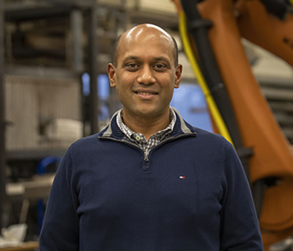
Vineet R. Kamat
John L. Tishman Family Professor of Construction Management and Sustainability
Vineet Kamat is a Professor of Civil and Environmental Engineering at the University of Michigan. His group researches methods to enable effective human-robot work collaboration in the construction, operation, and maintenance of civil infrastructure and the built environment. Their research has developed several licensable technologies that support automation and robotics, including modeling techniques that help on-site construction robots with autonomous decision making.
Project Meetings
During the winter 2026 semester, the Wade Trim team will meet on North Campus on TBD.
Work Location
Most of the work will take place on campus in Ann Arbor, with periodic visits to locations around Ann Arbor including but not limited to the City of Ann Arbor office, Wade Trim’s local office, and development sites around the city. MDP will provide transportation.
Course Substitutions: ChE Elective, CS Capstone/MDE, DATA Capstone, DATA Graduate Capstone, CoE Honors, IOE Senior Design, MECHENG 590, ROB Flex Tech
Citizenship Requirements: This project is open to all students. Note: International students on an F-1 visa will be required to declare part time CPT during Winter 2026 and Fall 2026 terms.
IP/NDA:Students will sign IP/NDA documents with both Wade Trim and the City of Ann Arbor.
Summer Project Activities: Internships may be available for interested students who have the right to work in the U.S.A. indefinitely, without sponsorship.