
The understanding of collective phenomena is one of the major intellectual challenges in a wide range of fields, from materials science to life science. One fundamentally interesting and technologically impactful system is swarm robotics – a collection of robots that can self-organize and exhibit higher-level collective intelligence. Because of the low cost of individual units of the swarm, swarm robots may have a profound impact on a wide range of disciplines, such as information gathering, cooperative missions, and collective artificial intelligence.
This Atombot project develops two robot prototypes: (1) Atombot Hydrogen: a miniature swarm robot system serving as a platform to study the fundamental emergent behavior of many-robot systems; (2) Atombot Helium: an advanced wheel-legged robot unit. While the Atombot system has potential applications across many fields, our immediate focus is on mission-critical applications in extreme environments, such as the energy sector and homeland security and safeguard.
The Atombot team seeks students with a broad range of backgrounds and interests to take roles in the technology, science, and commercialization subteams. Students can choose a subteam to work with and have the flexibility to move between different subteams. Students will have the opportunity to develop skills in additive manufacture, electronics, control and optimization, physics, and business development.
The entire project is flexibly structured into two major teams, Atombot Hydrogen and Atombot Helium, based on the robot prototype each team works on. Within each team, multiple subteams can be dynamically formed to promote focus and efficiency and nurture team science. Each team has a team leader, who will oversee the research activities of the team and take the prime responsibility of reporting. Students are expected to work closely with their respective team members and, at the same time, collaborate organically with other teams. Students may move between teams and subteams as workload and individual interest dictates.
Students at all levels, from first-year undergraduate students to graduate students, are welcome to apply to fill in the different roles of the project. Furthermore, recurring enrollment after one year is encouraged for the students to develop a deep understanding of the technology as well as leadership skills. As the students’ knowledge grows over time, leadership roles such as technical lead and entrepreneurial lead are available for experienced students.
Below are the skills needed for this project. Students with the following relevant skills and interest in the project are encouraged to apply! Although the team consists of subteams, students apply to the project as a whole, rather than individual roles on the team. Students are encouraged to describe their background as it relates to the following skills in their applications.
Likely Majors: Any (EP, ROB, ECE, CS, CSE, SI, MSI, PHYSICS, ME, MSE, NERS, BBA, Law)
Electronics Subteam (4-8 students)
Specific Tasks: design, manufacture, and test the electronic components—relevant to locomotion, sensors, and communications—of the two robot systems
Preferred skills: PCB and circuit design (Altium, Eagle, etc.) and fabrication; electronics platform, microcontroller, and embedded systems (Arduino, Raspberry Pi, Nvidia Jetson, etc.); sensing technologies (UWB, proximity, accelerometer, gyrometer, etc.) and near-field communication technologies; programming with C/C++/Python
Mechanics and Manufacture Subteam (4-8 students)
Specific Tasks: design, manufacture, and test the mechanical components of the two robot systems
Preferred skills: CAD design (SolidWorks); fabrication skills (3D printing, laser cutter, milling machine, soldering, etc.)
Algorithms and Software Subteam (2-4 students)
Specific Tasks: perform simulations of the two robot systems; develop control methods
Preferred skills: programming with C/C++/Python; experience with some robot simulation platforms; self-balancing algorithms
Robot Physics Subteam (2-4 students)
Specific Tasks: review the literature on collective behavior of robots and robophysics; collect data of the atombot swarm; study the dynamics and phase behavior of atom swarm (jamming, phase transitions, etc.).
Preferred skills: statistical mechanics/thermodynamics; probability theory and stochastic processes; programming with C/C++/Python; liquid state physics.
Entrepreneurship and Business Development Subteam (1-2 students)
Specific Tasks: explore the use case of swarm robots; construct a business plan; design and create a website; discover and interview potential customers.
Preferred skills: oral and written presentations and communications; business leadership; web design.
Apprentice Researcher (1-2 students)
Specific Tasks: Interest in project material, willingness to develop skills. Students will be integrated into the operations of a subteam. Reserved for first- and second-year undergraduate students.
Preferred skills: Any STEM
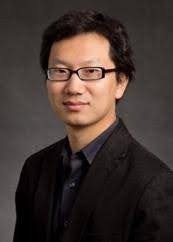
Y Z, PhD
Professor in the Department of Nuclear Engineering and Radiological Sciences, Department of Electrical Engineering and Computer Science, Department of Materials Science and Engineering, Department of Robotics, and Applied Physics Program.
The research in the Z Lab can be summarized into two words: Matter and Machine. In the realm of Matter, his group synergistically integrates statistical mechanics and molecular fluid mechanics theories, accelerated molecular simulations, understandable AI methods, and neutron scattering experiments to extend our understanding of rare events and long timescale phenomena in complex material systems. Particular emphasis is placed on the physics and chemistry of liquids, glasses, and complex fluids, especially at interfaces, under extreme conditions, or when driven away from equilibrium. Concurrently, on the Machine front, leveraging their expertise in materials and modeling, his group advances the development of soft robots and human-compatible machines, swarm robots and collective intelligence, and robots in extreme environments. These two research areas, spanning from fundamental to applied, serve as integral pillars in their overarching mission to foster a sustainable, resilient, and secure energy infrastructure.
Weekly Meeting Time and Location:
Students will enroll in ENGR 255,355,455, or 599 for 2 credits per term. Annual, two-term enrollment commitments begin each January.
The Atombot team holds a one-hour all-hands mandatory in-person meeting once every week (typically on Monday 5-7 pm ET), to discuss everything pertinent to the project and students’ growth, such as planning, progress, technical problems and solutions, coordination, publication, etc.
Subteams meet weekly with their subteam leader in person at mutually convenient times. The PI/Faculty may attend subteam meetings as required. Team members are expected to meet and work together in person. Labs are located in ERB.
We maintain a Slack space to communicate, coordinate progress, seek support from others, and generally keep each other informed.
Course Substitutions: Honors, ROB 590, CS-ENG/DS-ENG/EE/CE-ENGR 355 and higher can count toward Flex Tech
These substitutions/departmental courses are available for students in these respective majors. MDP does not yet have a formal agreement with other departments for substitutions/departmental courses not listed. Please reach out to your home department’s academic advisor about how you might apply MDP credits to your degree plan.
Citizenship Requirements: This project is open to all students on campus
IP/NDA: Students who successfully match to this project team will be required to sign an Intellectual Property (IP) Agreement prior to starting participation in January.
Location: In Person Only. This project requires in-person participation on the Ann Arbor campus for the entire project period.
Summer Opportunity: Some Summer research internships may be available for qualifying students.
Learn more about the expectations for this type of MDP project