
This faculty research team presents a chance to join an exciting research group that has won competitive NASA selections to design, build, and test particle instruments for a variety of space-based missions. Sending these detectors out into interplanetary space to measure plasma velocity, density, and temperature of the solar wind increases our understanding of the Sun’s corona and the solar wind. One such mission, the Parker Solar Probe is now in its third orbit around the Sun, getting closer and moving faster than any man-made object has before. As part of a suite of instruments, the Solar Probe Cup (SPC) built by Professor Kasper’s team of scientists and engineers has a front row seat on the spacecraft.
A new mission is emerging: NASA’s Sun Radio Interferometer Space Experiment (SunRISE) project, which will characterize coronal mass ejections, the most violent type of space weather. This MDP team will build a parallel data processing pipeline for the SunRISE mission that will identify planetary emission from outer planets like Jupiter in response to extreme space weather. Additionally, the team will build and operate a ground-based radio antenna array whose frequency coverage partially overlaps with that of SunRISE. This antenna array will enable a myriad of student research, including numerical simulation of the antenna gain pattern, tracking low frequency bursts from lightning, and imaging the brightest galactic sources. After launching, SunRISE is expected to operate for at least 12 months in orbit. The MDP team has already deployed a radio antenna at nearby Peach Mountain and have made progress in creating additional software analysis pipelines for future SunRISE data. In this next term of MDP, the team is aiming to deploy a full 4 element radio interferometer at Peach Mountain and build a software analysis pipeline for imaging the data. The MDP team will also fabricate a 2 element radio interferometer to deploy at a high school in the Michigan Upper Peninsula.
The Space Physics Research Lab has an extensive history of successful instrument builds that have flown or are currently in orbit about some planetary body in the solar system such as Cassini, the mission to Saturn, SAM, an instrument onboard the Mars Rover Curiosity and much more.
First-year undergraduates through master’s graduate students are welcome to apply, and all will be encouraged to stay on the team for more than the two-semester minimum. Leadership roles are available in the lab, and experienced students will be a natural fit for these positions as their knowledge grows over time.
Below are the skills needed for this project. Students with the following relevant skills and interest in the project are encouraged to apply! Although the team consists of subteams, students apply to the project as a whole, rather than individual roles on the team.
Mechanical (3 Students)
Preferred Skills: Completed/taking ME 250 or AERO 205; Solidworks/CAD modeling; Machining(Mill); Mechanical Design; FEA; Matlab/Simulink; CNC; General Machining
Likely Majors: ME, AERO, MSE
Specific Tasks: Design and build permanent fixtures for radio antenna. Design and deploy hardware setup for self-sufficient radio array. Provide support for hardware in ground array.
Electrical (3 Students)
Preferred Skills: Completed EECS 215/EECS 314; Completed/taking EECS 230; Completed/taking EECS 411; Circuit design; Radio Design; Soldering; LabVIEW
Likely Majors: EE
Specific Tasks: Alter bandpass filter in LWA antenna to observe frequencies below 20 MHz. Track down electromagnetic noise sources from within the antenna & receiver systems. Provide support for hardware in ground array.
Software & Data Analysis (3 Students)
Preferred Skills: Programming experience: Python/MATLAB/IDL (emphasis on Python); taken/taking EECS 280; data analysis; signal analysis/processing (taken/taking EECS 216); website design experience (HTML/CSS/Javascript)
Likely Majors: CS, CSE, EE, PHYSICS, CE, SI
Specific Tasks: Design transient array detection, beamforming, and classification database for SunRISE. Provide support for computer hardware in the ground array. Design software to process ground array’s data with FX correlation.
Apprentice Researcher (3 Students)
Preferred Skills: Interest in project material, willingness to develop skills. Students will be integrated into the operations of a subteam. Open to First-year and Second-year undergrad students ONLY.
Likely Majors: Any STEM
Faculty PI
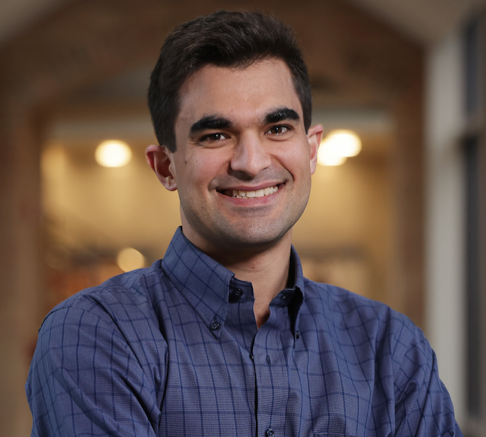
Mojtaba Akhavan-Tafti, Ph.D.
Dr. Mojtaba Akhavan-Tafti is an Associate Research Scientist in the Department of Climate and Space Sciences and Engineering. Dr. Akhavan-Tafti is the Principal Investigator of the Magnetospheric Multiscale (MMS) mission Early-Career Grant, titled: “Magnetic Reconnection between Coalescing Magnetic Flux Bundles,” utilizing state-of-the-art in-situ observations and global kinetic simulations. He also has experience analyzing spacecraft data from Parker Solar Probe to look for magnetic switchbacks in its data. He is also the head of SunRISE outreach, and the primary instructor for the MDP course. His interests also span into entrepreneurship, having started a company to bring a cutting-edge solar panel device to market.
Executive Mentor
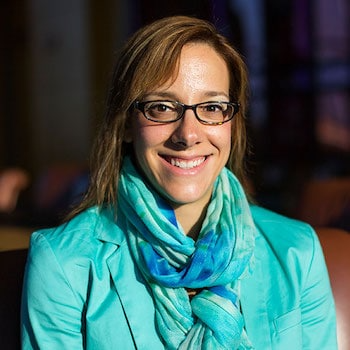
Susan T. Lepri, Ph.D.
Dr. Susan T. Lepri is a Professor in the Department of Climate and Space Sciences and Engineering at the University of Michigan and Director of the Space Physics Research Laboratory (SPRL). Her research centers around topics in heliophysics which include tracing charged particles in the heliosphere to their sources. In particular, she uses charged particle measurements to study sources of the solar wind, unraveling the physics of coronal mass ejections, and tracing dust and gas particles to their sources and acceleration mechanisms in the heliosphere. Dr. Lepri has led the development of portions of the Heavy Ion Sensor (HIS) on the European Space Agency’s Solar Orbiter mission and continues to develop advanced space instrumentation for upcoming NASA missions. She is currently the Principal Investigator of NASA’s SunRISE (Sun Radio Interferometer Space Experiment) mission, which will use an array of six CubeSats to study solar activity and radio emissions to improve understanding of solar particle storms. Dr. Lepri’s innovation in STEM education has been recognized with the Claudia Joan Alexander Trailblazer Award.
Meeting time and location: For academic credit, our MDP full team meets in-person for a general team meeting on Wednesdays 4:30 pm – 5:30 pm ET. Each subteam also meets once a week in-person. A two-term commitment will begin in January.
Team Organization: Each subteam has a team leader that reports to and meets with the faculty PI. The teams are flexibly structured to enhance creativity and opportunity for student growth.
Course Substitutions: Honors, CS-ENG/DS-ENG/EE/CE-ENGR 355 and higher can count toward Flex Tech.
These substitutions/departmental courses are available for students in these respective majors. MDP does not yet have a formal agreement with other departments for substitutions/departmental courses not listed. Please reach out to your home department’s academic advisor about how you might apply MDP credits to your degree plan.
Citizenship Requirements: This project is open to all students on campus.
IP/NDA: Students who successfully match to this project team will be required to sign an Intellectual Property (IP) Agreement prior to participation in January.
Location: In-person participation is required. Some team meetings and activities may be held remotely.
Summer Opportunity: Summer research fellowships may be available for qualifying students.
Learn more about the expectations for this type of MDP project