
Motor vehicles must be safe and easy to use, determined using real vehicles and in driving simulators. However, many driving simulators are too expensive to purchase, too complex to use, take too long to program, and can lack the desired functions. To support research on driver workload and driver distraction, this project is (1) building an easy-to-use driving simulator through the creative use of free software (e.g., Unreal Engine 5, Roadrunner), simple hardware, and student creativity (2) conducting that research.
To achieve goal 1, this team is (1) creating driveable simulations of real roads and test facilities (e.g., Mcity) and creating or modifying drivable virtual worlds (e.g., Yehorivka, simple cities, expressways) (3) finding and implementing vehicles in those worlds, (3) developing software to simulate traffic using the Wizard of Oz method, and (4) interfacing a low-cost steering system and motion base to provide increased realism.
Achieving goal 2, conducting human performance experiments, involves (1) planning experiments to answer research questions, (2) developing test materials (questionnaires, driving scenarios) and obtaining permission to conduct experiments, (3) recruiting and testing subjects, (4) analyzing the megabytes of data collected to answer the research questions, and (5) describing background, methods, results and conclusions in professional technical reports and papers. These research skills are applicable to any domain, not just human factors/ergonomics.
The team produces documentation and reports, both written and video summaries, so the software developed can be used by those without strong computer backgrounds. The team also produces reports and papers describing the research. Having publications on your resume is a big plus for industry and academia.
Given the team size, team skills are emphasized – planning, organizing, and communicating – to prepare students for real-world jobs as well as graduate school (and conducting research).
Students apply to the project as a whole, not for a particular position. At the initial meeting the project advisor identifies the research questions to be addressed supplemented by the transition plan from the previous team. Collectively the advisor and team then decide which subteams (often virtual worlds, vehicles, experiments) should be created and what they should do. Given who has been accepted to the team, the team decides how those subteams should be staffed and who should lead them (sometimes someone from a previous team). An important part of those decisions are the capabilities of each student and what they want to do, following this paragraph. These titles are ignored after the team is formed.
First-year undergraduates through master’s graduate students are welcome to apply, and all will be encouraged to stay on the team for more than the 2-semester minimum (which starts in January). Leadership roles are available in the lab, and experienced students will be a natural fit for these positions as their knowledge grows over time.
Below are the skills needed for this project. Students with the following relevant skills and interest in the project are encouraged to apply! Although the team consists of subteams, students apply to the project as a whole, rather than individual roles on the team.
Software Engineer (10 Students)
Specific Tasks: Virtual world creation, program vehicles and traffic, produce documentation and reports
Desirable Skills: Coding (In Python and C), experience with creating gaming platforms, knowledge of Unreal Engine and Roadrunner desired but readily learned
Likely Majors: CS, CSE, SI, MSI, DATA (required courses: EECS 280 is important, 281 is valuable)
Vehicle Dynamics / Motion Platform Engineer (3 Students)
Specific Tasks: Develop motion platform algorithms and interface with software, improve vehicle handling
Desirable Skills: Experience with robots, knowledge of Python, vehicle handling and dynamics, knowledge of Unreal, Roadrunner desired but readily learned
Likely Majors: ME, ROB, CE, EE
Human Factors and Interface Specialists (8 Students)
Specific Tasks: Develop scenarios and interface between driver/occupants, simulator and road systems, conduct experiments, analyze large data sets,
Likely Majors: CEE, SE, IOE, URP, SI, MSI, DATA, STATS
Relevant classes: IOE 333, 436, 437; SI 101, 110, 325, 303, 305, 313, 347, 425
Apprentice Researchers (4 Students)
Requirements: Interest in project material, willingness to learn. They may not have any of the skills listed but they have the drive and initiative to be valued team members. The slot is open to first- and second-year undergraduate students ONLY. Once a person is a member of the team, these titles are irrelevant and ignored, and we just see what students can do.
Likely Majors: Any
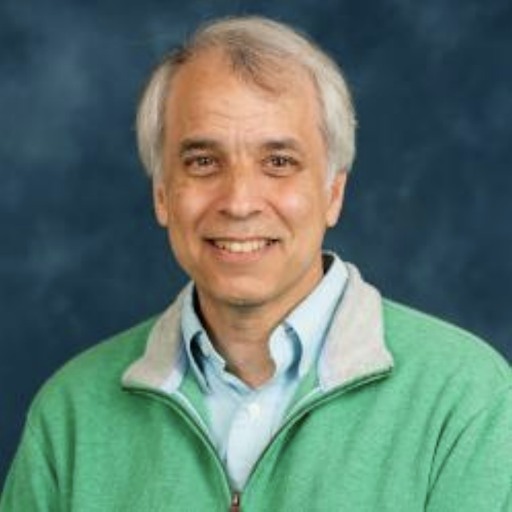
Paul Green, PhD
Dr. Green is a research professor in and leader of UMTRI’s Human Factors Group, an adjunct research professor in the University of Michigan Department of Industrial and Operations Engineering (IOE), and a lecturer in the School of Information. He teaches automotive human factors and human-computer interaction classes. He is the leader of U-M’s Human Factors Engineering Short Course, the flagship continuing education course in the profession, now in its 67th year. Dr. Green leads a research team that focuses on driver distraction, driver workload, workload managers, human-computer interaction and vehicle controls and displays. More recently, the team has expanded their focus to include partially automated vehicles. That research makes extensive use of instrumented cars and driving simulators.
Weekly Meeting Time and Location: This MDP team currently meets in-person on Mondays 7:00 pm – 9:00 pm ET on North Campus. In addition, subteams meet about once per week at a time of their choosing. We have set up 3 computers with powerful graphics cards, Unreal, and steering wheel/pedal assemblies at UMTRI, room 310, on North Campus (2901 Baxter Road). For safety reasons, that software is not to be operated remotely. Students must be on-time and prepared for meetings. Students are expected to ask questions and participate in discussions, show initiative, and be engaged in all aspects of this project.
Course Substitutions: Honors, CS-ENG/DS-ENG/EE/CE-ENGR 355 and higher can count toward Flex Tech. For other substitutions, ask ask your home department’s academic advisor for guidance about substitutions.
Citizenship Requirements: This project is open to all students on campus
IP/NDA: Students joining a project team must sign an Intellectual Property (IP) Agreement before participating in January.
Location: In-person participation is required. Some team meetings and activities could be remote.
Learn more about the expectations for this type of MDP project