
What is this project?
Join a team applying real-time optimization, control systems, and machine learning to redesign the energy management system (EMS) for UM’s Campus Farm -minimizing carbon emissions and improving reliability. You will build an advanced EMS to manage solar power, grid electricity, refrigeration, and EV charging, helping the farm meet its 2026 carbon neutrality goals.
This project is being funded by the Michigan Institute for Energy Solutions, in partnership with the Campus Farm.
What am I going to do?
MDP projects push you to integrate interdisciplinary engineering knowledge and develop strategic problem-solving skills. On this project, students will develop a robust, optimization-based energy management system (EMS) to control the Campus Farm’s solar-powered infrastructure.
- Design and build a stable energy management system that minimizes carbon emissions based on vehicle usage, cooler load, and grid emissions data
- System integration of EV Charger, Coolbot, PV Inverter, and EVdatalogger
- Optimized control of energy flow between solar, grid, cooler, and EV
- Public-facing dashboard visualizing energy flow and carbon impact
- Advanced forecasting models for EV usage, cooler demand, grid emissions, and weather
- Predictive scheduling and control algorithms for near-optimal energy use
Tech Stack: WattTime API, Python and associated controls toolboxes, Optimization could leverage other open-source toolboxes like CVX, API integration
Stretch Goal Opportunities Include:
- Incorporate machine learning for continuous performance improvement
- Implement real-time adaptive controls
- Demonstrate generalizability of the system for other small-scale food systems
Why does it matter?
You will develop a robust, optimization-based Energy Management System (EMS) to control the Campus Farm’s solar-powered infrastructure: a 13.2kW ground-mounted solar array, an electric produce cooler, and a Ford F-150 Lightning delivery vehicle.
Your team will design and implement an optimization-driven architecture that reduces greenhouse gas emissions, improves resilience, and informs day-to-day operational decisions. You’ll build on previous work that implemented a basic rule-based controller. You will integrate real-time data from the solar array, EV, refrigeration system, and electric grid – leveraging marginal emissions data from WattATTTime and weather forecasts. Using intelligent scheduling, predictive modeling, and advanced control strategies, the system will dynamically allocate power, reduce peak demand, and adapt to grid conditions.
At its core, this is a complex, systems-level optimization and control problem. The work will produce a replicable model for sustainable agricultural logistics, and have a direct impact on UM’s sustainability goals.
Food systems, including storage and transportation, account for ~25% of global greenhouse gas emissions. This project supports UM’s carbon neutrality efforts by creating an EMS that intelligently balances solar, grid, and battery power.
Beyond reducing emissions, the system will improve resilience by allowing the EV battery to back-power the cooler during outages – reducing food loss. The project will also have high visibility with campus stakeholders and visitors at Matthaei Botanical Gardens, showcasing student leadership in sustainable systems engineering.
Below are the skills needed for this project. Students with the following relevant skills and interests, regardless of major, are encouraged to apply! This is a team-based multidisciplinary project. Students on the team are not expected to have experience in all areas, but should be willing to learn and will be asked to perform a breadth of tasks throughout the two-semester project.
Optimization (2-3 students)
Specific Skills: Linear programming, constrained optimization, advanced optimization methods
Likely Majors: IOE, MATH, STATS
Controls / Power Systems (2-3 Students)
Specific Skills: Control design, power system modeling, EMS integration
Must have completed EECS 216 or equivalent. EECS 460 is desired
Likely Majors: EE, CE, ECE
Software Development (2 Student)
Specific Skills: API integration, hardware communication, reliable system design, UI development
Must have completed EECS 281 or equivalent
Likely Majors: CS, CE, CSE
Forecasting Model Development (1 Student)
Specific Skills: Multivariate modeling, time series forecasting
Likely Majors: DATA, STATS, MATH
Additional Desired Skills/Knowledge/Experience
Strong candidates will have familiarity or experience with some of the following items, and a positive attitude to learn what is necessary, as the project gets underway.
- We are seeking students passionate about smart systems design, sustainability and clean energy, and well-developed skills to apply to the challenge
- Practical experience with power design, controls and/or EMS systems
- Project based engineering experience (student team experience is a plus)
- Practical experience with applied machine learning
- Experience with weather forecasting and weather data integration
- Hands-on experience with mechatronics, basic controls, or servo systems
- Interest in carbon neutrality, renewable energy systems, life cycle assessment, or sustainable food systems
Recommended Coursework
If you’ve completed any of the following courses, we recommend mentioning them in your application materials:
- EECS 216: Introduction to Signals and Systems
- EECS 281: Data Structures and Algorithms
- EECS 418: Power Electronics
- EECS 463: Power System Design and Operation
- EECS 508: Control and Modeling of Power Electronics
- EECS 534: Analysis of Electric Power Distribution Systems and Loads
- IOE 410: Advanced Optimization and Computational Methods
- IOE 510 / Math 561: Linear Programming I
- IOE 511: Continuous Optimization Methods
- IOE 512: Dynamic Programming
Sponsor Mentor
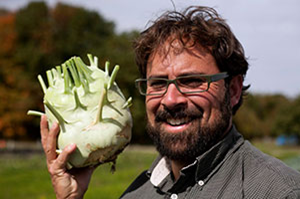
Jeremy Moghtader
Campus Farm Program Manger
Jeremy has 20+ years of experience in sustainable food systems work, with expertise in ecological and organic production for local and regional markets, new and beginning farmer training, year-round cold climate food production in passive solar hoophouses, and regional food system development. He was a founding member of the Food System Economic Partnership and Tilian Farm Development Center. Currently, as the program manager of the UM Campus Farm at Matthaei Botanical Gardens, a student-driven living learning lab for sustainable food systems work on campus, Jeremy collaborates with students and faculty from across campus on high-impact research teaching and learning opportunities in sustainable food systems, with a focus on carbon neutrality and food sovereignty.
Faculty Mentor
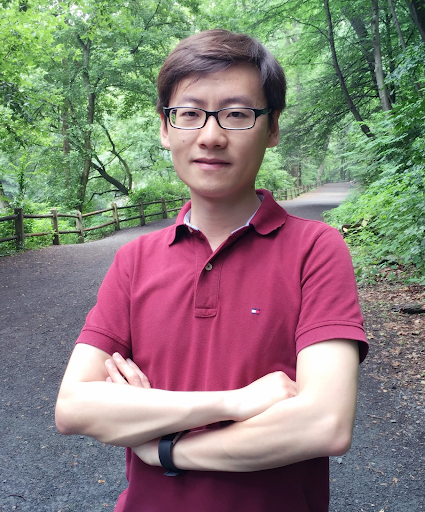
Ang Chen
Ang Chen is an Associate Professor in the Computer Science and Engineering Department. Ang’s work focuses on systems, networking, and security. Ang is particularly drawn to problems that require a cross-disciplinary approach and produce a practical impact with current projects in digital transformation, cloud management, runtime programmable networks, and programmable in-network security.
Project Meetings
During the winter 2026 semester, the Campus Farm team will meet on North Campus on TBD.
Work Location
Work will take place on North Campus and/or on-site at the Camps Farm. MDP will provide transportation as required to the Campus Farm.
Course Substitutions: CE MDE, ChE Elective, CS Capstone/MDE, EE MDE, CoE Honors, IOE Senior Design, MECHENG 590
Citizenship Requirements:
- All students may participate in this project.
- International Students: CPT declaration (curricular practical training) is NOT required for this project because the sponsor is part of the University.
IP/NDA: Students will sign standard University of Michigan IP/NDA documents.
Summer Project Activities:
No summer activity will take place on the project.