
What is this project?
This project tackles the challenge of extending the lifespan of expensive 0.2-micron final water filtration membranes by using one or more prefilters in dead-end filtration systems. Students will develop repeatable experimental setup and data-driven models to predict filter failure rates, and recommend cost-effective, high-performing multilayer filter configurations. The outcome will inform the design of robust filtration systems used in critical applications producing sterile water.
What am I going to do?
MDP projects push you to integrate interdisciplinary engineering knowledge and develop strategic problem-solving skills. On this project, students will develop repeatable experimental setup and data-driven models to predict filter failure rates, and recommend cost-effective, high-performing multilayer filter configurations.
- Design and construct a test apparatus for multistage dead-end filtration
- Select or formulate a reproducible challenge solution to simulate field conditions
- Identify or develop a robust method to quantify particulate concentration in filtrate (ideally in real time)
- Design and run filtration experiments across various multilayer filter types and configurations
- Collect and analyze data to evaluate performance and impact of each filter stage
- Develop a predictive model for the failure of the final filter based on multilayer filtering
- Document findings and recommend best-fit multilayer filter strategies based on empirical results
Stretch Goal Opportunities Include:
- Train a basic ML model (e.g., random forest or XGBoost) to predict filter lifespan or breakthrough behavior based on input parameters: flow rate, particulate load, filter configuration
- Automate flow, pressure monitoring within the test apparatus
- Implement additional layers of filtration
Why does it matter?
Producing sterile water via dead-end filtration is essential for medical and laboratory analysis, emergency response and field use, industrial, and biopharmaceutical use. However, final-stage membrane filters are costly, and prone to rapid clogging. This project addresses a critical efficiency and cost bottleneck by designing and testing systems that extend membrane life through prefiltration. The work directly supports the development of more sustainable, deployable, and cost-effective sterile water systems.
Below are the skills needed for this project. Students with the following relevant skills and interests, regardless of major, are encouraged to apply! This is a team-based multidisciplinary project. Students on the team are not expected to have experience in all areas, but should be willing to learn and will be asked to perform a breadth of tasks throughout the two-semester project.
Fluid Dynamics and Separation Processes (3 students)
Specific Skills: Fluid mechanics, mass transfer and separation processes. Biosystems and surface chemistry
Likely Majors: ChE, CEE, BME, MSE
Data Analysis and Modeling (1 Students)
Specific Skills: Optimal experimental design, model development
(with participation in laboratory work)
Likely Majors: DATA, STATS, IOE
Mechanical Design (3 Students)
Specific Skills: Design and development of experimental equipment for clean environment: Fluid systems, lab instrumentation
Likely Majors: ME, BME
Additional Desired Skills/Knowledge/Experience
Strong candidates will have familiarity or experience with some of the following items, and a positive attitude to learn what is necessary, as the project gets underway.
- Team based / leadership experience in any student organizations
- Interest in the development and processing of biological and pharmaceutical material.
- If you have experience in any of the following, we’d like to hear about it:
- Broad-based engineering experience (any major) that will support creative solutions and positive teamwork
- Very practical, hand-on equipment and experimentation skills
- Experience with Arduino/Raspberry Pi or any sensor-based data acquisition
- Solid data modeling and experimental design skills
- Experience (or interest in building your skills) in modeling and simulating biological separation processes
- Design of experiments and basic statistical analysis
Applicable Coursework
- CHE 343: Separation Processes
- CHE 460: Chemical Engineering Lab II
- BIOMEDE/EECS 458: Biomedical Instrumentation and Design
- MECHENG 395: Laboratory I
- MECHENG 350: Design and Manufacturing III
- MATSCIE 518. Surface and Interfacial Engineering
Sponsor Mentor
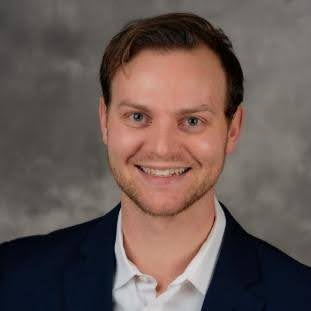
Karsten Poulsen
is a Senior Product Development Engineer, working on projects related to the purification and separation of biomolecules. With a background in materials science and chemistry, he holds a PhD from Duke University, where he studied (and predicted) nanoparticle-protein interactions. Outside of work, Karsten enjoys a wide range of hobbies, including 3D printing, DIY house projects, and mountain biking.
Executive Mentor
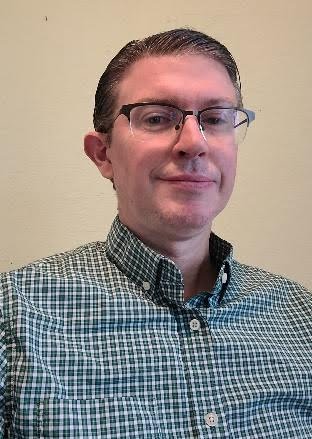
David Olson
David is a Principal Research and Development Scientist in the Water Technology & Solutions industry, with 15 years of experience in the field of Reverse Osmosis, Nanofiltration, Ultrafiltration, and Microfiltration Membrane development, as well as Spiral wound element design, and Depth & Pleated cartridge filter development. David has studied chemistry, math, and polymer chemistry, and holds a PhD in Polymer Chemistry from the University of North Carolina at Chapel Hill.
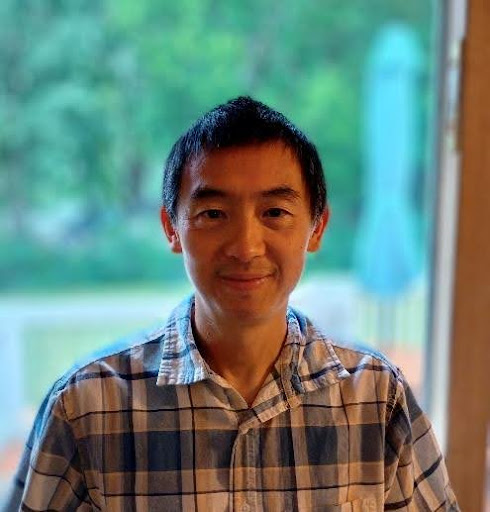
Xiaobin Wang
is a Principal Model Data Scientist, leading digital innovation activity, and working on data science and machine learning projects. He obtained a PhD in Physics from University of California San Diego. Xiaobin has published over 100 papers, is a book author, and holds over 80 patents.
Faculty Mentor
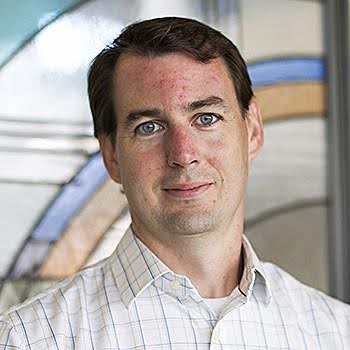
Dr. Andrew R. Tadd
Dr. Andrew R. Tadd joined the University of Michigan Department of Chemical Engineering as a full-time Lecturer in 2012, after serving as an Adjunct Lecturer and Asst. Research Scientist.
His research expertise lies in heterogeneous catalysis, especially reaction and conversion of hydrocarbons, focusing on catalyst synthesis, properties, and behavior. His industrial experience includes capital project execution, float glass manufacturing, and automotive glass manufacturing.
Andrew has been teaching key undergraduate courses in ChE for the last 10 years including the sophomore intro course (ChE 230), Separations (ChE 343), junior-level and senior-level labs (ChE 360 and 460), and the capstone process design course (ChE 487). He was awarded the CoE the Thomas M Sayer Teaching Award in 2018.
Project Meetings
During the winter 2026 semester, the Donaldson team will meet on North Campus on TBD
Work Location
Work will take place on campus in Ann Arbor.
Course Substitutions: ChE Elective, BME PiP or CD, CoE Honors, MECHENG 490
Citizenship Requirements:This project is open to all students. Note: International students on an F-1 visa will be required to declare part time CPT during Winter 2026 and Fall 2026 terms.
IP/NDA: Students will sign IP/NDA documents that are unique to Donaldson.
Summer Project Activities: No summer activity will take place on the project.