
What is this project?
At the Leslie Science & Nature Center, visitors have the opportunity to hike on trails and explore the main campus features, such as a natural playscape, outdoor raptor enclosures, and other wildlife inside when open to the public. Students will design and build a smart, triggerable animal feeding apparatus to aid in both training and enrichment for the live raptors, by creating a system that will deliver food items by remote trigger.
What am I going to do?
MDP projects push you to integrate interdisciplinary engineering knowledge and develop strategic problem-solving skills. On this project, students will create a fully functional feeding device, capable of deploying varied food types by remote trigger.
- Design and prototype an automated feeding mechanism for diverse animal diets
- Develop a power management system compatible with AC and DC power
- Implement a remote control system for easy activation during animal training sessions
- Ensure the device is reliable and safe for both animals and handlers
Stretch Goal Opportunities Include:
- Integrate sensors for motion or presence detection to trigger feeding events
- Scheduled delivery of food
- Develop a solar power integration for enhanced sustainability
- Enable remote activation and status monitoring via WiFi connectivity
Why does it matter?
Live animals play a vital role in creating memorable programming and delivering conservation messaging to a wide ranging audience. This project will enhance the welfare of the animals, reduce staffing costs, and increase the efficiency of training plans. An effective and versatile food delivery system will innovate the process of training an animal to know that they have performed a desired behavior as quickly as possible, in order to avoid confusion.
Animals are trained with a food reward system. Currently, it is time consuming and inefficient to train and reward animals, particularly in widespread areas like the raptor enclosure. An automated feeding device would streamline animal care operations, allowing for more convenient feeding in support of enrichment and training. This device would allow animal trainers to be more efficient, and train more effectively, without support from additional staff.
Below are the skills needed for this project. Students with the following relevant skills and interests, regardless of major, are encouraged to apply! This is a team-based multidisciplinary project. Students on the team are not expected to have experience in all areas, but should be willing to learn and will be asked to perform a breadth of tasks throughout the two-semester project.
Mechanical Design and Mechatronics (2-3 students)
Specific Skills: Mechanical Design: determining user needs, techniques for fast prototyping, experimental testing and evaluation, integrating mechanical and electrical components. Mechatronics.
EECS 314 or equivalent is a strong plus
Likely Majors: ME, ROB
Hardware and Sensor Integration (2-3 Students)
Specific Skills: Electrical system design, power systems, circuit design, and remote control integration
Completion of EECS 215/216 is recommended
Likely Majors: EE, CE, ECE
Additional Desired Skills/Knowledge/Experience
Strong candidates will have familiarity or experience with some of the following items, and a positive attitude to learn what is necessary, as the project gets underway.
- Familiarity with electronic control systems and automation
- Practical mechanical system design skills: 3D printing, Sensor/hardware integration, basic controls, fast prototyping, CAD, machining, etc.
- Experience with Arduino, Raspberry PI, or similar
- Experience in programming (e.g., Python, Arduino) for device control and sensor integration
- Strong problem-solving skills and creativity in designing animal-safe devices
- Ability to collaborate in an interdisciplinary team and communicate effectively with animal care professionals
- Interest in wildlife education is a plus!
Sponsor Mentor

David Clipner
Director of Education and Wildlife
David Clipner is a lifelong learner who holds an elementary education degree from Eastern Michigan University, and has previously studied everything from philosophy to welding & fabrication. After 6 years as a Bassist and Sound Engineer in the Marine Corps Band he moved to Michigan to start new adventures, though he still keeps his fingers wet in the audio/music world by teaching audio production at Washtenaw Community College, and playing locally from time to time. He leads various workshops on heritage skills, such as artisan baking and hand tool woodworking, hosts beverage tastings, and consults on wildlife and ecological restoration projects. Teaching and sharing his many interests with others, including his wife, Mary and their four children, Tilden, Rye, Hawthorn, and Briar remains his favorite way to spend his time. “You only get one life that we know of. Why would you want to keep all the wonderful things you learn to yourself? What a waste that would be.”
Faculty Mentors
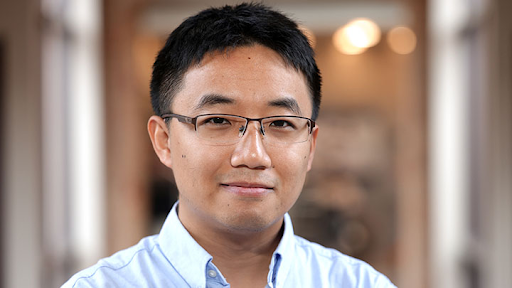
Hongyi Xiao
Hongyi is an Assistant Professor in the Department of Mechanical Engineering. His research group focuses on granular materials consisting of discrete particles that can collectively behave like a solid, a liquid, or a gas. They aim to reveal their related solid and fluid mechanics as well as statistical physics using a combination of 2D and 3D experiments, discrete particle simulations, as well as machine-learning informed modeling. The current focus is to understand how they deform from a structure-property perspective, based on which we design particle interactions and dynamics at the microscopic scale for novel collective behaviors at the material scale. They are also interested in how animals and robots interact with granular matter as a soft and yielding medium.
Project Meetings
During the winter 2026 semester, the Leslie Science & Nature Center team will meet on North Campus on TBD.
Work Location
Most of the work will take place on campus in Ann Arbor with periodic visits to the Leslie Science & Nature Center adjacent to North Campus to research, learn, and test.
Course Substitutions: CE MDE, BME PiP or CD, ChE Elective, DESCI 503, EE MDE, CoE Honors, MECHENG 490, ROB Flex Tech , ROB 590
Citizenship Requirements: This project is open to all students. Note: International students on an F-1 visa will be required to declare part time CPT during Winter 2026 and Fall 2026 terms.
IP/NDA: This project will be open source and all students must sign an open source agreement.
Summer Project Activities:
No summer activity will take place on the project.