
What is this project?
Look to the future of space in 10+ years and design a modular based spacecraft that is built on interchangeable, fundamental building blocks (no single use point designs) leveraging model based systems engineering (MBSE) that pushes the boundaries of conventional spacecraft to accommodate a new space architecture. Students on the Northrop Grumman team will deliver an MBSE model of the modular building blocks, a study of what needs to be reworked, and a hardware example of one of these modular building blocks/interfaces.
What am I going to do?
MDP projects push you to integrate interdisciplinary engineering knowledge and develop strategic problem-solving skills. On this project, students will use model-based systems engineering (MBSE) to design and prototype hardware for a quick-change cabling interface that is serviceable in space.
- Complete a mini project in System Engineering and Model Based Systems Engineering to build foundational skills for the rest of the project.
- This will include a month’s effort where Systems Engineering is taught as a foundational element to the start of the design. Creation of the architecture, requirements, and preliminary design will be worked on for a small system to showcase the power of MBSE, and how you will utilize it to enhance and be adaptable throughout the Systems lifecycle.
- Use MBSE to create a design that addresses the top challenges as agreed with the sponsor. Model these building blocks that create the spacecraft, and identify those that need overhaul for future integration.
- Propose and evaluate novel designs for module interfaces.
- Design and build the hardware for a common, quick change cabling interface serviceable in space, and demo replacing the interface doing a safe-to-mate test in simulated orbit.
- Guided by the mentors, select one solution concept and develop a rough prototype of one of the components, incorporating the modular quick-change bus.
- Evaluate the prototype against the requirements, and deliver a final report and briefing on your findings.
- Tech Stack: DOORS, CAMEO, and MATLAB
Stretch goal opportunities
- Merge the common interface hardware demonstrated with the new technological advancement, and demo the rapid in-space (real time) change to the mission requirements with this new building block that changes the fundamentals of the bus, making it more novel for its new mission requirements.
- Demonstrate this with HW or rapid prototyping with strong traceability, using MBSE to the original requirements, and the agile developed new requirements that were identified and mapped, to show this rapid development of the system.
- Show the ability to swap back to the original requirements and HW within the models and HW/SW.
- Assess the potential for new missions using your optimized modular design. Categorize them as they relate to current mission operations.
Why does it matter?
This project gets to the heart of what’s possible in space systems design. It supports Northrop Grumman’s transformative advancements in critical technologies, aiming to build a spacecraft that remains relevant as technology evolves. The goal? Enable low cost, low non-recurring engineering (NRE), and rapid development schedules, while shaping the future of the space industry.
You’ll begin with a modular, MBSE-based spacecraft bus, modeled with standard building blocks that can be expanded as new technologies emerge. The focus is on creating standard interfaces so that spacecraft can be modified or upgraded in space, making them adaptable for multiple missions and shifting needs.
This means imagining a spacecraft made of interchangeable, fundamental building blocks—not single-use point designs. With MBSE, you’ll map out each subsystem, identifying what to leverage, what to redesign, and what to revolutionize.
You’ll examine existing spacecraft buses – built by Northrop Grumman and others, and determine which components to keep, evolve, or replace. Then, you’ll propose and prototype modular building blocks and interfaces that make the bus more forward-thinking.
Your research and brainstorming might include upgrades like:
- Advanced common interfaces
- Upgraded propulsion systems
- Refueling ports
- Grapple points for in-orbit servicing
- Electric or hybrid propulsion for flexible movement across orbits
- Additive manufacturing for rapid and custom builds
- Modular components designed for upgrades via servicing vehicles
The end goal? A novel and transformative spacecraft that pushes boundaries, designed with modularity and agility at its core to support the new paradigms of the evolving space landscape.
Below are the skills needed for this project. Students with the following relevant skills and interests, regardless of major, are encouraged to apply! This is a team-based multidisciplinary project. Students on the team are not expected to have experience in all areas, but should be willing to learn and will be asked to perform a breadth of tasks throughout the two-semester project.
General Design + Systems Integration (2-3 students)
Specific Skills: Excellent broad based engineering skills; depth in your major field.
Experience in requirements and specification skills. Motivation to develop knowledge and skills in system engineering.
Prior experience in systems integration, MBSE, Space Systems advancement, and/or Complex system design a significant plus.
Likely Majors: AERO, SPACE, NAME, ROB
Mechanical Design & Modeling (1-2 Students)
Specific Skills: Mechanical design, system integration, strong design skills, experimental testing, and evaluation.
Likely Majors: ME, SPACE, AERO, NAME, ROB
Electrical Engineering (2 Students)
Specific Skills: Electrical design, strong design skills, experimental testing, interface design, electrical interface skills, cable management, basic coding.
Likely Majors: EE, CE, ECE
Additional Desired Skills/Knowledge/Experience
Strong candidates will have familiarity or experience with some of the following items, and a positive attitude to learn what is necessary, as the project gets underway.
- Prior experience in MBSE (model-based systems engineering)
- Practical experience with subsystem integration, requirements, and specifications. We highly value experience working on practical engineering teams (If you have engineering competition team experience, in any field, please be sure to highlight this!)
- Experience with any of these software tools: DOORS, CAMEO, and MatLab
- Excellent, creative problem-solving skills
- An enthusiastic, proactive, hands-on approach to project work
- Experience working on teams
- Collaborative and innovative thinker
- Contingency planning and execution
- Domain knowledge and/or experience specific to design for space flight
- Experience in design for additive manufacturing
- Experience building and designing standard interfaces from an EE, ME, and software perspective
- Knowledge of ISAM
Sponsor Mentor

Christienne Mancini
Program Manager
Christienne Mancini has been working on large-scale systems from Space Systems, Missile Defense Systems, UAS systems, as well as Submarines and Surface Ships, and has 21 years of full systems engineering life-cycle experience. Christienne is a Program Manager for Northrop Grumman’s Space Systems sector in the Science and Robotics Exploration unit.

Dr. Anthony J. DeCicco
Sr. Systems Engineer
Anthony DeCicco works on multiple space product development programs at Northrop Grumman, merging the technologies of tomorrow to create new missions. Anthony joined Northrop Grumman in 2018 after completing his PhD in Aerospace Engineering at the University of Maryland on deflecting asteroids with an electric propulsion system he developed and tested. Anthony recently returned from a 13mos deployment at the South Pole Station, where he operated a telescope array investigating the polarization of the cosmic microwave background. His past programs include Europa Clipper, the Human Lunar Landing System, Space Robotics development, Persistent Platforms, and Cygnus. He currently works within the Civil Space organization on missions related to LEO commercialization, including a post-ISS human presence.
Executive Mentor
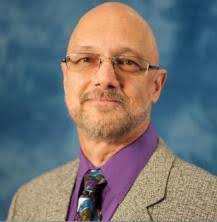
Andy Kwas
NG Fellow 2/Engineering Systems Architect
Andrew Kwas graduated from the University of Michigan in 1980 with a Master’s degree in Aerospace Engineering. He has 45 years with TRW/NGC, working in advanced projects specializing in on-orbit space products, astrophysics projects, and weapon system developments. In Mr. Kwas’ role as a NG Fellow specializing in space and advanced manufacturing, he supports NASA, AFRL, NRO, DARPA, SMDC, ORSO and the Navy in high tech programs. Mr. Kwas is on the Technical Advisory Board for Cornell, U Michigan, Virginia Tech, Georgia Tech and U New Mexico. He is considered one of the prominent additive manufacturing (AM) experts in the country, and has produced numerous papers in AM, advanced satellite technology, unique logistics solutions, and miniaturization of components. Mr. Kwas is an appointed Research Scholar at the University of New Mexico.
Faculty Mentor

Fernando Saca
Fernando Saca graduated from the University of Michigan in 2009 with a Bachelor’s degree in Mechanical engineering and in 2010 with a Master’s degree in Space Engineering. While at UofM he worked on several student projects including the first CubeSats (RAX/RAX-2/M-Cubed) with S3FL and MXL and participated in the Multidisciplinary Design Program. After graduating he worked with Orbital Science Corporation/OrbitalATK/NGC on the Cygnus Commercial Resupply Vehicle starting as a Flight Assurance Engineer and eventually the Lead Systems Engineer for the CRS2 contract for Cygnus. In 2019, he joined the Space Physics Research Laboratory (SPRL) within the UofM as a Lead Instrument Systems Engineer where he mainly works on Heliophysics and Magnetometer instruments.
Project Meetings
During the winter 2026 semester, the Northrop Grumman team will meet on North Campus on TBD.
Work Location
Most of the work will take place on campus in Ann Arbor. If Northrop Grumman has funding available, this team may have the opportunity to travel to Washington DC to present their work. See citizenship requirements below for more information.
Course Substitutions: CE MDE, ChE Elective, EE MDE, CoE Honors, MECHENG 490, MECHENG 590, ROB 590, SED 503
Citizenship Requirements:
- Open to all students
- International students on F-1 visas must declare part-time CPT for both Winter 2026 and Fall 2026 terms
- Note: If Northrop Grumman has funding available, this team may have the opportunity to travel to Washington DC to present their work at Northrop Grumman headquarters which requires US citizenship to enter. While international students are eligible to participate on the team, they would not be able to participate in the trip.
IP/NDA: All students must sign the IP/NDA documents.
Summer Project Activities:
No summer activity guaranteed. Internships might be available.
Learn more about the expectations for this type of MDP project