
What is this project?
Surgeons use electrosurgical pencils in the operating room, but the smoke generated by this operation is hazardous. Students will redesign the existing surgical smoke evacuator to independently regulate flow to multiple devices, and integrate sensor technology to monitor filter health and performance, enhancing safety and efficiency in the operating room.
What am I going to do?
MDP projects push you to integrate interdisciplinary engineering knowledge and develop strategic problem-solving skills. On this project, students will design and prototype a smarter electrosurgical smoke evacuator that can independently regulate flow to multiple devices, and monitor filter health.
- Review technologies for monitoring filter effectiveness (eg. VOC, particulate, moisture, pressure)
- Design and prototype flow regulator concepts for adaptive multi-pencil support
- Identify sensors and technologies for monitoring filter health
- Integrate sensors into the existing surgical smoke evacuator
- Prototype and test the system’s effectiveness in regulating flow and filter monitoring
Stretch Goal Opportunities Include:
- Evaluate the device in a clinical simulation center
- Fully integrate design into existing smoke evacuator housing
- Integrate user notifications about filter life and health
- Develop algorithm to predict remaining life
- Collect usage and performance data
Why does it matter?
Surgical smoke poses health risks to both patients and operating room personnel across the globe. By automatically regulating flow to multiple pencils and monitoring filter health, this project will improve operating room safety, surgical site visibility, and reduce the environmental impact of surgical waste.
Below are the skills needed for this project. Students with the following relevant skills and interests, regardless of major, are encouraged to apply! This is a team-based multidisciplinary project. Students on the team are not expected to have experience in all areas, but should be willing to learn and will be asked to perform a breadth of tasks throughout the two-semester project.
Hardware and Sensor Integration (2-3 students)
Specific Skills: Control system development, circuit design, sensor selection, evaluation, integration, and sensor design
Completion of EECS 460 and or EECS 461 is a plus
Experience in fluid dynamics is a plus
Likely Majors: EE, CE, ECE, ROB, ME, BME
General Programming (2-3 Students)
Specific Skills: General Programming skills, good software engineering practice and design, and a willingness to quickly develop new technical skills as required for the project
EECS 281 (or equivalent) is required
Likely Majors: CS, DATA, Any
Fluid Dynamics (1 Students)
Specific Skills: Foundation in fluid mechanics principles, including flow dynamics, turbulence, and diffusion, flow regulator development
Would also need to be willing to contribute to hardware or programming areas
Likely Majors: ME, AERO, ChE, NAME, BME
Additional Desired Skills/Knowledge/Experience
Strong candidates will have familiarity or experience with some of the following items, and a positive attitude to learn what is necessary, as the project gets underway.
- Stryker culture is high-energy and quality driven. We value those who are good team members, demonstrating a hands-on, proactive approach to their work. We particularly appreciate teammates able to work across disciplinary categories and contribute widely.
- Passion for the field of health care
- Successful team-based experience in any context
- Experience in fluid dynamics and fluid modelling is a plus
- Practical mechanical system design skills: 3D printing, sensor/hardware integration, basic controls, fast prototyping, CAD, machining, etc.
- Practical electrical system design skills: circuit design, feedback controls, and signal processing
Sponsor Mentor
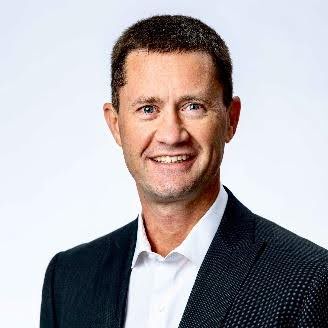
Brian VanDerWoude
Mechanical engineer and Technical Fellow at Stryker with 25 years of experience designing and developing medical devices. Brian has launched numerous products for orthopedic and general surgical applications, and has received 37 U.S. patents. He is currently leading elestrosurgical product research for Stryker’s Surgical Technologies business unit.
Faculty Mentor
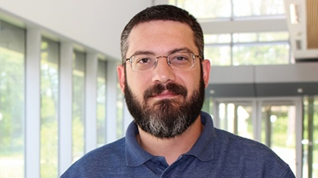
Robert Middleton
Assistant Research Scientist, Mechanical Engineering
Rob’s research interests include combustion, focusing primarily on automotive engines, simulations of spark ignited and advanced auto ignition combustion modes using 1D models and 3D CFD including large scale parallel simulations, and the impact of fuel properties and kinetics on engine efficiency and emissions. Rob is an experienced MDP mentor.
Project Meetings
During the winter 2026 semester, the Stryker Pencil team will meet on North Campus on TBD.
Work Location
Most of the work will take place on campus in Ann Arbor. Students will have access to the engineering services department at Stryker Instruments Kalamazoo for testing or access to specialized equipment, should the need arise.
Course Substitutions: CE MDE, BME PiP or CD, ChE Elective, CS Capstone/MDE, EE MDE, CoE Honors, MECHENG 490, MECHENG 590, ROB Flex Tech
Citizenship Requirements: This project is open to all students. Note: International students on an F-1 visa will be required to declare part time CPT during Winter 2026 and Fall 2026 terms.
IP/NDA: Students will sign IP/NDA documents that are unique to Stryker.
Summer Project Activities: No summer activity is required. Qualified students will be guaranteed an opportunity to interview for summer 2026 internships. Students must have the right to work in the U.S.A. indefinitely, without sponsorship, to participate in a summer internship.