
What is this project?
Help modernize one of the most energy-intensive systems on campus, the University Hospital’s chilled water plant. The student team will build a simulation-based model of this system and explore high-impact strategies to reduce energy use and costs.
This is a rare opportunity to apply your knowledge of thermodynamics, energy modeling, simulation, and optimization in a real-world, mission-critical healthcare environment with multi-million-dollar implications.
This project is being funded by the Michigan Institute for Energy Solutions, in partnership with Michigan Health.
What am I going to do?
MDP projects push you to integrate interdisciplinary engineering knowledge and develop strategic problem-solving skills. On this project, students will complete the foundational work necessary to understand, model, and evaluate the current chilled water system, including:
- Develop a complex building energy model of the existing hospital chilled water system using eQuest, integrating complex data sets from the University Hospital system
- Calibrate the model with real world data
- Simulation-based evaluation of multiple improvement scenarios, quantifying their potential energy, cost, and emissions savings
- Write a final report that includes the modeling approach, recommendations for each scenario, and strategic guidance for facility administrators on future upgrades
- Tech Stack: eQuest
Stretch goal opportunities
- Full integration of all proposed system alternatives into the eQuest model to support scenario analysis
- Design and validation (via simulation) of one or more energy efficiency proposals, such as:
- Lowering chilled water setpoints to improve chiller efficiency
- Installing variable frequency drives (VFDs) on primary loop pumps
- Seasonal switchover to dry coolers for winter cooling to reduce chiller runtime
- Linking with the adjacent Cancer Center chiller system to provide shared capacity and redundancy
Why does it matter?
The University of Michigan Hospital relies on a dedicated chilled water plant to regulate building temperatures, manage humidity, and cool essential medical equipment – including MRI machines. The plant is managed by the Health System’s Facility Operations team and includes four chillers with a total capacity of 5,530 tons.
Running this plant is expensive – $1.6 million per year, with half of that cost coming from electricity use alone. Because of this, even small improvements in efficiency could lead to significant cost savings and reduced environmental impact.
As part of this project, your team will build a comprehensive, simulation-based energy model of the hospital’s chilled water system. This model will:
- Help the Facilities team evaluate system performance
- Provide strategic recommendations for energy and cost reduction
- Support long-term planning for upgrades or the possible development of a new chilled water plant in the next 5–10 years
Here’s what’s at stake:
- The current chillers operate at 0.8–0.9 kW per ton of cooling, much less efficient than the industry benchmark of 0.5 kW per ton
- Improving chiller performance could save the hospital over $500,000 each year
- Better use of the hospital’s 2.1-million-gallon thermal storage basin could help shift energy use away from peak hours, saving an additional $250,000 annually
By building a system-level model, you’ll help shape capital investment decisions, reduce operational costs, and advance the University’s goals for sustainable and energy-efficient infrastructure.
This project is a chance to make a real impact on one of the most energy-intensive systems on campus.
Below are the skills needed for this project. Students with the following relevant skills and interests, regardless of major, are encouraged to apply! This is a team-based multidisciplinary project. Students on the team are not expected to have experience in all areas, but should be willing to learn and will be asked to perform a breadth of tasks throughout the two-semester project.
Thermodynamic Modeling (2-3 students)
Specific Skills: Strong understanding of thermodynamics, heat transfer, and cooling systems. Students will use the eQuest simulation platform.
Prior experience in thermal systems modeling or building energy simulation tools is an advantage.
Likely Majors: ME, ChE, MSE
Controls / Power & Energy Systems (2-3 Students)
Specific Skills: Familiarity with control systems design and energy system optimization.
Ability to incorporate demand forecasting into system performance models.
Understanding of plant operations and feedback systems is helpful.
Likely Majors: ECE, CE, EE
Architectural & Civil Engineering Design (1-2 Students)
Specific Skills: High-level engineering modeling skills.
Experience in infrastructure or building system design and simulation.
Familiarity with HVAC system integration, structural limitations, or utility systems is beneficial.
Likely Majors: CEE, ARCH, ME
Additional Desired Skills/Knowledge/Experience
Strong candidates will have familiarity or experience with some of the following items and a positive attitude to learn what is necessary, as the project gets underway.
- Project based engineering experience. Strong interest and ability in hands-on engineering projects. Student engineering competition team experience is a strong plus.
- Students with experience or interest in carbon neutrality, clean/renewable energy systems, life cycle assessment, sustainable systems.
- Demonstrated leadership in curricular or personal activities.
- Practical data modeling experience incorporating forecasting models.
- Experience with energy management systems
Sponsor Mentor
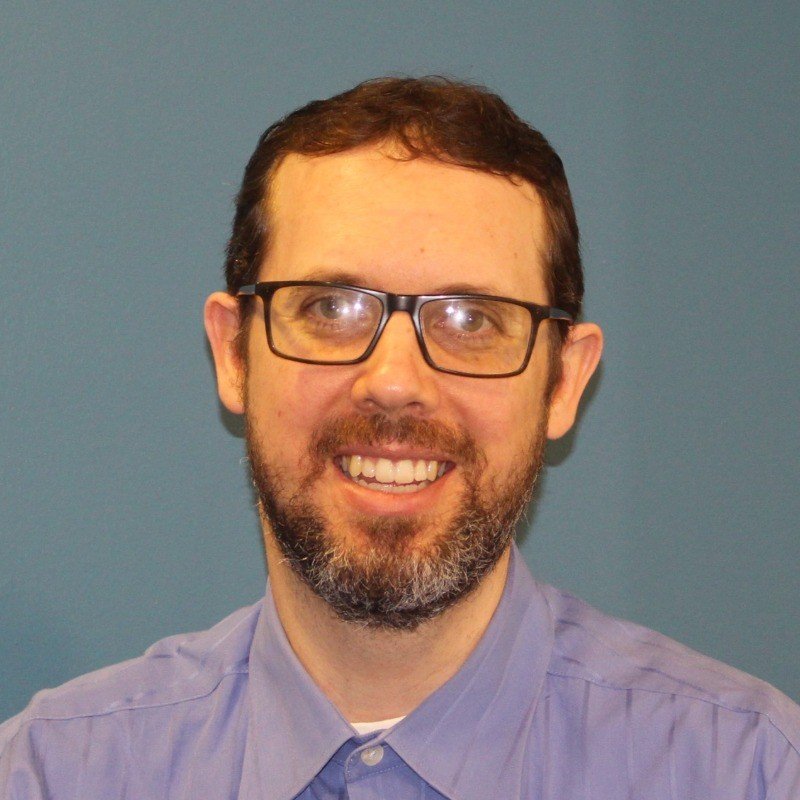
David Wernette
David is an Energy Conservation Engineer with the University of Michigan Health, Facilities Administration Department. He has over 3 years of experience in his current role and 20+ years of engineering experience during his career. Previously, David has held positions as a mechanical engineer and prior to his current role at University of Michigan Health, spent 5 years with University of Michigan’s AEC department. Currently David manages the energy consumption at UMH facilities, continuously identifying and implementing opportunities to reduce energy and water consumption, while looking for future strategies to reach the Universities goal of carbon neutrality by 2040.
Executive Mentor

Chip Amoe
Chip Amoe is the U-M Health Sustainability Officer. Prior to joining U-M Health, he served as Director of Sustainability for Michigan State University where he led the development and implementation of sustainability strategies and initiatives across the campus and the community.. He has over 10 years of experience in sustainability, government relations, and policy analysis having previously served as the Director of Sustainability and Assistant Director of Government Affairs at Henry Ford Health System. Chip has a strong track record of collaborating with diverse stakeholders, influencing decision-makers, and advancing environmental and social goals.
Faculty Mentor

Carol Menassa
Associate Professor and John L. Tishman CM Faculty Scholar, Civil Engineering
Professor Menassa’s research focuses on understanding and modeling the interconnections between the human and the built environment. From her website: In this context, my research group focuses on two main research thrusts. In the first, we study the impact of human behaviors and actions on the built environment. For example, we use modeling and simulation to understand the impact of occupants on energy use in buildings and develop decision frameworks to sustainably retrofit existing buildings. In the second thrust, we focus on understanding the effect of the built environment on human comfort, well-being and accessibility issues. For example, we use non-intrusive methods such as low cost thermal cameras to provide personalized thermal comfort settings in single and multi-occupancy space. We also develop personalized localization and path planning methods to assist people with physical disabilities in navigating unknown building environments. My research group has expertise in energy simulation, complex adaptive systems modeling, high-level architecture and informatics, computer vision and robotics
Project Meetings
Meetings will be held on North Campus during Winter 2026 on: [DAY] from [TIME – TIME]
Work Location
- Primary work: North Campus, Ann Arbor
- Site visits: U-M Hospital on Central Campus to observe and model the chilled water plant
Course Substitutions: CE MDE, ChE Elective, EE MDE, CoE Honors, MECHENG 490, MECHENG 590
Citizenship Requirements:
- All students are eligible
- International Students: CPT declaration not required (the sponsor is part of the University)
IP/NDA: Students will sign standard University of Michigan IP/NDA document(s).
Summer Project Activities: No summer activity will take place on the project.
Learn more about the expectations for this type of MDP project