
- Literature review of best practice in all relevant technologies, patents, etc. including publicly available data and codebase, and a background review of internal data available for each use case.
- Demonstrate functional competence in the tech stack (deep neural network training, image classification, training dataset management for deep learning) through a “mini-project”. Note – it is unlikely that any student would be fully competent in the entire tech stack before the project. Significant individual training effort is expected and required
- Determine a research approach for each use case. Divide into subteam and implement a phase I solution for each use case. Subteams will concentrate on a use case but also coordinate on common code and technique developments
- Present phase I solutions to mentors and receive feedback
- As a team, develop a strategic approach to further refine phase I models
- Implement development of phase II models
- Write a summary paper presenting results, learning, critique of current status, and recommendations for future work.
- If any of the use case models are sufficiently successful, the entire team will submit joint papers/posters to relevant journals and conferences, such as the International Conference of the IEEE Engineering in Medicine and Biology Society (EMBC) and Injury Biomechanics Symposium.
- Develop an improved CT segmentation method that provides similar segmentation accuracy as human beings. This method can be applied to many anatomic regions of the human body for future applications
Generative AI Model Development (3-4 Students)
Specific Skills: Generative AI model manipulation and development. EECS 281 (or equivalent) is required. EECS 445 (or equivalent) is highly desired. Likely Majors: CS, DATA, ECEComputer Vision (2-3 Students)
Specific Skills: Computer vision experience, general programming skills, good software engineering practice and design, highly motivated to develop skills in the project area EECS 281 (or equivalent) is required. Likely Majors: CS, DATA, ECE, ROBMedical Imaging (1-2 Students)
Specific Skills: Anatomy and medical imaging (particularly CT) Students must also have intermediate coding skills, and the ability to participate in model development. Likely Majors: BME+CSAdditional Desired Skills/Knowledge/Experience
If you have any of these characteristics, highlight them on your Experience and Interest Form and talk about them in your (optional) one way video interview.
- Successful team-based project experience
- Excellent interpersonal skills and the willingness to work hard
- Experience working on long term, team-based projects – specific project management experience is a plus
- Knowledge / practical experience working with human anatomy
- Practical Experience with any/most of our tech stack
- Fluency in PyTorch for deep neural network training
- Experience in fine-tuning neural networks
- Basic understanding of deep neural network architectures
- Note – it is unlikely that any student would be fully competent in the entire tech stack before the project. Individual training effort is expected and required.
- Practical experience implementing predictive analytics in a complex data environment.
- If you have completed any of the following courses (or equivalent) please indicate the term/grade received: EECS 281, EECS 442-Computer Vision, EECS 445 Intro ML, and EECS 492 – Intro AI.
Sponsor Mentor

Jingwen Hu, PhD
Research Professor Jingwen Hu is Associate Director and Research Professor in the University of Michigan Transportation Research Institute Biosciences Group. He also holds a joint appointment at the Department of Mechanical Engineering. Dr. Hu’s research interests primarily focus on impact/injury biomechanics in motor-vehicle crashes by a multidisciplinary approach, using a combination of experimental, computational, and epidemiological procedures. One of the highlights of his recent research is the development of parametric computational human models representing a diverse population. Such models have been used to study the injury mechanism and safety design optimizations for various vulnerable populations, such as children, elderly, obese occupants, pedestrians, pregnant women, and wheelchair users.Sponsor Mentor

Monica Jones, PhD
Associate Research Scientist
Monica Jones is an Associate Research Scientist in UMTRI’s Biosciences Group. Dr Jones’ research spans vehicle occupant protection, engineering anthropometry, human factors, and human modeling for vehicle design and other areas of ergonomics, including consumer products and tools to facilitate the design of industrial workplaces. Although her research addresses the population as a whole, she has prioritized populations that include child passengers and obese occupants, as well as military and law enforcement personnel. She has led several laboratory and in-vehicle studies on anthropometry, belt fit, and occupant positioning and posture within the vehicle interior, aimed at developing design tools for improving occupant protection systems for the diverse population of vehicle users.Sponsor Mentor
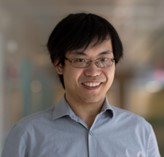
Wenbo Sun
Wenbo Sun is an Assistant Research Scientist in UMTRI’s Bioscience Group. Dr. Sun is particularly interested in statistical modeling of engineering system responses, considering the high dimensionality and complicated correlation structure, as well as quantifying the uncertainty from a variety of sources simultaneously, such as the inexactness of large-scale computer experiments, process variations, and measurement noises. Dr. Sun is also interested in data-driven decision making that is robust to uncertainty. Specifically, He delivers AI methodologies for anomaly detection and system design optimization, which can be applied to manufacturing process monitoring, distracted driving detection, out-of-distribution object identification, vehicle safety design optimization, etc.Faculty Mentor
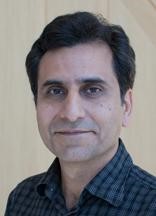
Kayvan Najarian, Ph.D.
The focus of Dr. Najarian’s research is on the design of signal/image processing and machine learning methods to create computer-assisted clinical decision support systems that improve patient care and reduce the costs of healthcare. Dr. Najarian’s lab also designs sensors to collect and analyze physiological signals and images, focusing on creating decision support systems to manage traumatic brain injuries, traumatic pelvic/abdominal injuries and hypovolemia. He serves as the Editor-in-Chief of Biomedical Engineering and Computational Biology and the Associate Editor of two other journals in the field of biomedical informatics.Weekly Meetings: During the winter 2025 semester, the team will meet on Mondays from 1:30 – 3:30 PM on North Campus.
Work Location: Most of the work will take place on campus in Ann Arbor.
Course Substitutions: CE MDE, ChE Elective, CS Capstone/MDE, Data Science MDE/Capstone, DS Graduate Practicum, EE MDE, CoE Honors, ROB Flex Tech, SI Elective/Cognate
Citizenship Requirements: This project is open to all students on campus. International Students: CPT declaration (curricular practical training) is NOT required for this project because the sponsor is part of the University.
IP/NDA: Students will sign standard University of Michigan IP/NDA documents.
Summer Project Activities: No summer activity will take place on the project.
Learn more about the expectations for this type of MDP project