
What is this project?
Revolutionize urban mobility by harnessing anonymized location data from connected devices to optimize traffic signal timing. Students will use real-world handset data from Verizon devices to design adaptive timing plans that improve flow for vehicles, cyclists, and pedestrians in both real and simulated environments.
What am I going to do?
MDP projects challenge you to integrate interdisciplinary knowledge and sharpen problem-solving skills. On this project, students will apply categorized location/timing data to optimize traffic signal timing.
- Collect, process, and analyze connected device data from controlled travel at the Mcity Test Facility utilizing provided devices.
- Develop and train AI/ML models to recognize travel modes from raw data.
- Apply travel mode classification to create signal timing plans for selected intersections.
- Optimize a series of 4-10 sequential traffic intersections to demonstrate potential improvements.
Stretch Goals May Include:
- Secure, access, and process historical handset location data for a live corridor of 3-12 intersections.
- Demonstrate signal optimization on historical urban data and compare against existing signal plans.
- Prototype connectivity for real-time signal retiming based on live data feeds.
Why does it matter?
There over 350,000 intersections with traffic signals in the US alone. The majority of these signals are on a fixed cycle, changing from green to yellow to red on a timed cycle, and most are static and not coordinated with surrounding signals. Currently, traffic signals are reevaluated every 5-7 years with discrete traffic studies that are limited to vehicle traffic and overlook pedestrians, bicycles, scooters, and other forms of mobility. Sometimes the updates are centralized, but often someone must go to each individual intersection and update the physical traffic box on site. This is costly and inefficient.
As communities grow and things like remote work change our commuting patterns, traffic signals are often not optimized. Verizon owns 37% of the mobile handset market in the US and therefore knows roughly where 1/3 of all people are at a given time. Verizon engineers along with researchers at Mcity aim to utilize this data to create a tool to optimize traffic signal timing with real-time connected data, dramatically improving intersection efficiency, reducing vehicular emissions, and enhancing safety for all roadway users. This project demonstrates the transformative power of modern data streams in creating smarter, more adaptive urban infrastructure – paving the way to better-managed, safer, and more sustainable cities.
Below are the skills needed for this project. Students with the following relevant skills and interests, regardless of major, are encouraged to apply! This is a team-based multidisciplinary project. Students on the team are not expected to have experience in all areas, but should be willing to learn and will be asked to perform a breadth of tasks throughout the two-semester project.
AI/ML Model Development and Data Analytics (2-3 students)
Specific Skills: Model Development: AI/ML modeling techniques: classification, time series and geographic based modeling.
EECS 281 (or equivalent) is required.
Likely Majors: DATA, CS, ECE
Systems Optimization (1-2 Students)
Specific Skills: Multi-objective optimization algorithms.
Likely Majors: IOE, MATH
Transportation Planning (1-2 Students)
Specific Skills: Traffic engineering and planning.
Likely Majors: CEE, URP
General Programming (1-2 Students)
Specific Skills: General programming skills, software engineering. Interest in developing AI/ML skills.
Tech stack TBD
EECS 281 (or equivalent) is required.
Likely Majors: CS, DATA
Additional Desired Skills/Knowledge/Experience
Strong candidates will have familiarity or experience with some of the following items, and a positive attitude to learn what is necessary, as the project gets underway.
- Strong problem-solving ability and enthusiasm for applied projects.
- Demonstrated success in team-based engineering work.
- Experience implementing AI/ML classification and time series models.
- Generation of synthetic datasets.
- Prior traffic planning experience (academic or practical)
- Applied optimization with large, real-world data sets.
- Experience with HPC clusters and handling very large data.
- Leadership experience in student organizations.
- Valid U.S. driver’s license, willingness to drive University vehicles at MCity.
- Experience traveling via scooters, bicycles, motorcycles, or other non-auto modes.
Recommended Coursework
Include completed relevant courses (term, institution, course number/title, and grade). If you’ve completed any of the following courses, we recommend mentioning them in your application materials:
- EECS 445: Introduction to Machine Learning
- EECS 492: Introduction to Artificial Intelligence
- IOE 310: Optimization and Computational Methods
- IOE 416: Queueing Systems
- CEE 450. Introduction to Transportation Engineering
- CEE 551. Traffic Science
- CEE 552. Travel Behavior Analysis and Forecasting
Sponsor Mentor

Anthony Magnan
Anthony Magnan, CVP, is the Head of Applied Vehicle Research at Verizon Wireless, based in West Bloomfield, Michigan. He is an experienced engineer with a background in the automotive industry, skilled in technologies such as 5G, C-V2X, DSRC, and MATLAB. He holds a Master of Science in Engineering and has Chief Technology Officer Program at the University of California, Berkeley, Haas School of Business. His career includes roles as a Distinguished Engineer at Verizon, Technology Advisory Board Member at the Center for Connected and Automated Transportation (CCAT), Carrier Planning Engineer at Ford Motor Company, RF Engineering Manager at Samsung SDS, and RF Engineer. He also served as a Damage Controlman in the US Navy.
Faculty Mentor
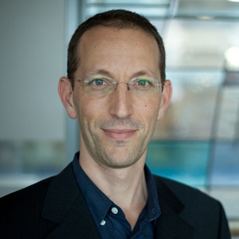
Shai Revzen
Associate Professor, Electrical and Computer Engineering
Shai’s research interests include the study of bio-inspired robotics and new methods and mechanisms for control. He has also been involved with the scientific study of animal and human locomotion based on nonlinear dynamical systems, and application to design of legged robotic vehicles and other devices.
Project Meetings
During the winter 2026 semester, the Verizon team will meet on North Campus on TBD.
Work Location
Most of the work will take place on campus in Ann Arbor including at MCity. There may be opportunities for field visits to observe particular traffic patterns (MDP provides transportation).
Course Substitutions: AUTO 503, ChE Elective, CS Capstone/MDE, DATA Capstone, DATA Graduate Capstone, GAME 503, CoE Honors, IOE Senior Design, MECHENG 590
Citizenship Requirements: This project is open to all students. Note: International students on an F-1 visa will be required to declare part time CPT during Winter 2026 and Fall 2026 terms.
IP/NDA: Students will sign IP/NDA documents that are unique to Verizon.
Summer Project Activities: No summer activity will take place on the project.