
What is this project?
As industries such as electric vehicles and renewable energy grow, signal, switching, and thermal losses are posing significant challenges with increased power demand. Students on the Yazaki team will model transistor losses to train a neural network to optimize power electronics design, and then verify the results with hardware testing.
What am I going to do?
MDP projects push you to integrate interdisciplinary engineering knowledge and develop strategic problem-solving skills. On this project, students will model transistor losses to train a neural network to develop optimized power electronics designs.
- Develop an analytical model of transistor loss (SiC/GaN)
- Verify the model using hardware test bed experimental data
- Train a neural network to learn the input-output relationship between design decisions and losses/performance
- Leverage the neural network to generate optimized designs
- Verify the optimization results with hardware experimental data
- Tech Stack: Pandas, Python, NumPy, PyTorch, Matplotlib
Stretch Goal Opportunities Include:
- Extending the model to other hardware designs such as magnetics design, analog/digital control designs, parasitics, and sensor design
Why does it matter?
As industries such as electric vehicles and renewable energy grow, the limitations of power electronics are being reached. Signal, switching, and thermal losses are significant challenges with increased power demand.
A “flexible” and “accurate” transistor loss estimation model can facilitate and expedite powered electronics converter design and development, allowing thermal management systems (heatsink, cold plates, etc) to be accordingly optimized. Power density optimization will help Yazaki increase the switching frequency to reduce the size of the passive components (inductors, transformer, chokes, etc).
Moreover, linking the AI/ML optimization models to hardware development will help in cost optimization by having the optimized thermal systems, switches, power density, and 99% efficiency targets for kW range application.
Furthermore, having a successful model can then help us to extend this optimization approach into the other aspects of the hardware design, including but not limited to magnetics design, analog/digital control designs, parasitics, and sensor design.
Below are the skills needed for this project. Students with the following relevant skills and interests, regardless of major, are encouraged to apply! This is a team-based multidisciplinary project. Students on the team are not expected to have experience in all areas, but should be willing to learn and will be asked to perform a breadth of tasks throughout the two-semester project.
Power Electronics (1-2 students)
Specific Skills: Understanding of SiC/GaN transistor design and losses
Likely Majors: ECE, CSE, EE, CE
Experimental Hardware (1-2 Students)
Specific Skills: Test bed operation, experimental design, hardware data acquisition and analysis
Likely Majors: ECE, EE, ROB
Data Modeling and Machine Learning (1-2 Students)
Specific Skills: Neural network design/training, scripting for data processing and simulation, regression analysis
Likely Majors: CS, DATA, CSE
Thermodynamic Modeling (1-2 Students)
Specific Skills: Transient and steady-state thermodynamics modeling
Likely Majors: ME, ChE
Additional Desired Skills/Knowledge/Experience
Strong candidates will have familiarity or experience with some of the following items, and a positive attitude to learn what is necessary, as the project gets underway.
- Experience with simulation tools
- Familiarity with PCB layout and measurement in lab environments
- Understanding of thermal management in power electronics
- Familiarity with Tech Stack: Pandas, Python, NumPy, PyTorch, Matplotlib
Recommended Coursework
Include completed relevant courses (term, institution, course number/title, and grade). If you’ve completed any of the following courses, we recommend mentioning them in your application materials:
- EECS 320: Introduction to Semiconductor Devices
- EECS 418: Power Electronics
- EECS 445: Introduction to Machine Learning
- EECS 527: Power Semiconductor Devices
- EECS 545: Machine Learning
- CHE 342. Mass and Heat Transfer
- MECHENG 336. Thermodynamics II
- MECHENG 535. Thermodynamics III
Sponsor Mentor
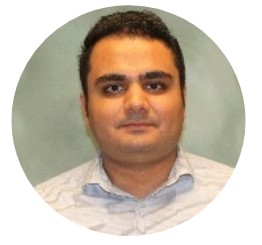
Sam Nia
Sam Nia Joined Yazaki North America in June 2023 as a High Voltage Power Electronics Engineer. He has 12 years of experience in designing and developing high voltage power electronic products. He holds a Ph.D. in Electrical Engineering and is a licensed Professional Engineer (PE) in Michigan. Sam specializes in developing advanced power systems for automotive applications, including pure electric vehicles (EVs) and hybrids (HEVs). Prior to Yazaki, Sam was the Senior Power Electronics Engineer, analyzing, benchmarking and designing high power high voltage traction inverters to drive EV motors. Throughout his career, Sam has been actively involved in: power electronic converters: AC-DC, DC-DC and DC-AC systems, motor drives, Inverters and OBCs. EMI/EMC: EMI and EMC Test, measurement, and attenuation, EMI filtering, chokes, shields and PCB design PCB/circuit design, power converters, gate drivers, signal/power integrity, mixed circuit and open/closed loop control design, magnetic components, inductors, transformers.
Executive Mentor
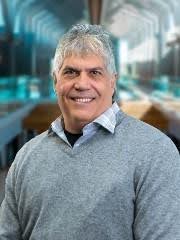
Dave Berels
With over 30 years of experience in automotive systems development, Dave is a forward-thinking automotive leader with a passion for innovation, product optimization, and the integration of emerging technologies. His career spans leadership roles in electrical architecture, hybrid and electric systems, and battery technologies across global OEMs and Tier 1 suppliers.
Dave brings a unique fusion of deep technical acumen, strategic product vision, and entrepreneurial spirit to complex challenges in electrified mobility. His expertise spans from systems engineering and Six Sigma quality processes to market strategy and new product development, backed by a portfolio of over 20 U.S. patents.
Dave holds a Master’s in Product Development and a Bachelor’s in Electrical Engineering, and remains active in the SAE, INCOSE, and broader engineering communities.
Faculty Mentor
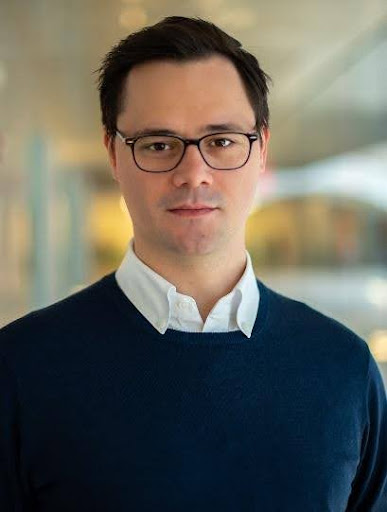
Vladimir Dvorkin
Vladimir Dvorkin is an Assistant Professor in the Electrical Engineering and Computer Science Department at the University of Michigan. He has held positions as a postdoctoral fellow at the Massachusetts Institute of Technology’s Energy Initiative and LIDS from 2021–2023, and as a visiting researcher at Georgia Tech’s School of Industrial and Systems Engineering. He received his Ph.D. in Electrical Engineering from the Technical University of Denmark in 2021. His research focuses on the energy transition towards a renewable-dominant and low-carbon energy supply, viewed through the lenses of optimization and machine learning, energy economics, and algorithmic data privacy. His work has received numerous recognitions, including the Marie Skłodowska-Curie Actions and Iberdrola Group postdoctoral fellowship, and the IEEE Transactions on Power Systems Best Paper Award.
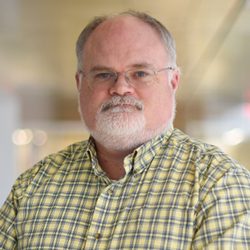
Heath Hofmann
Technical Consultant | Electrical Engineering
Professor Hofmann is currently a Professor and Associate Chair of Graduate Affairs of Electrical and Computer Engineering at the University of Michigan. He is also an IEEE Fellow. Dr. Hofmann’s research area is power electronics, specializing in the design, analysis, and control of electromechanical systems.
Project Meetings
During the winter 2026 semester, the Yazaki team will meet on North Campus on TBD.
Work Location
Most of the work will take place on campus in Ann Arbor, with periodic required visits to Yazaki’s Canton, MI offices to utilize their high voltage test facilities, meet with stakeholders, and present findings. MDP will provide transportation.
Course Substitutions: AUTO 503, CE MDE, ChE Elective, EE MDE, GAME 503, CoE Honors, MECHENG 490
Citizenship Requirements: This project is open to all students. Note: International students on an F-1 visa will be required to declare part time CPT during Winter 2026 and Fall 2026 terms.
IP/NDA: Students will sign IP/NDA documents that are unique to Yazaki.
Summer Project Activities: No summer activity will take place on the project.